


The Byzantine-Bulgarian war from 809 to 815 left a lasting impact on both empires. It ignited when Emperor Nikephoros I halted tribute payments to Khan Krum of Bulgaria, sparking a series of battles and significant losses for the Byzantines. Despite achieving a major victory at the Battle of Pliska in 811, where Khan Krum was killed, hostilities persisted for several more years. In the end, the Byzantines upheld their dominance, but at a steep cost. Meanwhile, the Bulgarians went on to build their own empire, solidifying their role as a formidable force in European affairs.

The Battle of Pliska, fought in 811, was a pivotal clash between the Byzantine Empire and Bulgaria. Under the leadership of Emperor Nicephorus I, the Byzantine army encountered a Bulgarian force led by Khan Krum. Although the Byzantines initially suffered setbacks, they ultimately secured a significant victory, killing Khan Krum and shifting the war's momentum in their favour. However, the conflict left lasting effects on both sides: the Byzantines emerged resource-depleted and militarily weakened, while the Bulgarians persisted in their resistance against Byzantine authority.

Charlemagne, the famed king of the Franks, passed away on January 28, 814, in Aachen. He had reigned over a vast empire for over forty years, celebrated for his military successes, religious reforms, and cultural advancements. His death marked a pivotal moment in European history, signalling the close of an era and ushering in a time of political upheaval and uncertainty.

In 815, a 30-year peace treaty was established between Bulgaria and the Byzantine Empire, ending their prolonged conflict. This agreement ushered in a period of stability and prosperity, enabling both nations to concentrate on internal matters and foster economic growth.

The Battle of Ellandun in 825 AD marked a pivotal clash between the Kingdom of Wessex and the Kingdom of Mercia. King Egbert of Wessex secured a decisive victory, overcoming Mercian forces and positioning Wessex as the leading power in England.

The Aghlabids, a Muslim dynasty centered in Ifriqiya (present-day Tunisia), established an emirate in Sicily during the 9th century. From this base, they launched raids against the Italian mainland, focusing on the prosperous cities of Southern Italy. These incursions not only secured wealth and resources for the Aghlabids but also left a lasting influence on the region's culture and economy.
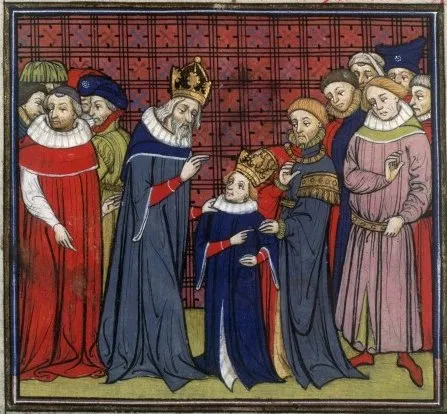
The death of Louis the Pious in 840 signalled the close of a significant chapter in Frankish history. As the son of Charlemagne, Louis had served as Emperor of the Franks for more than twenty years, yet his rule was plagued by internal conflicts and rivalries among his sons. His passing ignited a fierce power struggle among his surviving heirs, sparking a tumultuous period of instability and warfare, later known as the Carolingian Civil War.

Dublin, Ireland's capital, was established by Vikings along the island's eastern coast in the 9th century. Initially a modest settlement, Dublin expanded into a vital hub of trade and commerce in the area. The Vikings developed extensive trade routes linking Dublin with other parts of Ireland, as well as with England, Scandinavia, and the Baltic region. Today, Dublin stands as a dynamic, cosmopolitan city, celebrated for its rich cultural heritage and robust economy.

At its height, the Carolingian Empire spanned much of western and central Europe. However, following the death of Louis the Pious, his three sons partitioned the empire into three sections under the Treaty of Verdun. This agreement allotted East Francia to Louis the German, West Francia to Charles the Bald, and Middle Francia to Lothair I.

The earliest documented Viking raid in Iberia took place in 844, when a Viking fleet launched an assault on Galicia, in present-day Spain's northwest. Under the leadership of a chieftain named Turgesius, the Vikings plundered and set fire to the town of Porto, inflicting considerable damage and instilling fear among the local population. This attack initiated a wave of Viking incursions across the Iberian Peninsula that would span several decades, leaving a lasting imprint on the region's history.

In 846 AD, a contingent of 11,000 Saracen Arab fighters from Africa, accompanied by 500 horses, launched an assault on Rome, desecrating numerous Christian shrines. The attack notably targeted the tombs and basilicas of Sts. Peter and Paul, delivering a profound shock to the Christian community and igniting widespread outrage across Europe. This incident remains a somber chapter in the shared history of Christianity and Islam.

In the late 9th century, the first Norse settlers, led by Ingólfur Arnarson, arrived in Iceland. According to legend, Ingólfur cast two pillars from his ship into the sea, vowing to settle wherever they landed. They washed ashore at what is now Reykjavik, where he founded a farmstead. Over the following decades, more Norse settlers joined him, establishing farms and communities throughout the island. Despite harsh conditions—including volcanic eruptions and severe weather—the settlers adapted and flourished, with their descendants ultimately forming the Icelandic nation.

The Rurik Dynasty in Rus originated in the late 9th century when Rurik, a Varangian prince, was invited by local Slavic tribes to govern them. Rurik founded his capital in Novgorod, and his descendants would rule over the Kievan Rus—a loose federation of East Slavic tribes—for more than 700 years. The Rurikid rulers were instrumental in shaping the Russian state, including the adoption of Christianity and laying the groundwork for a centralized government.

The schism between the Eastern and Western churches emerged from longstanding theological, cultural, and political differences that had gradually developed between the two branches of Christianity. This division resulted in the establishment of the Roman Catholic Church in the West and the Eastern Orthodox Church in the East. Although there were occasional attempts to bridge the divide, the schism persisted until the late 20th century, when both churches began working toward reconciliation and unity.

The reign of Alfred the Great, spanning from 871 to 899, stands as a pivotal era in English history. Alfred became the first king to unite the Anglo-Saxon kingdoms, and his decisive victories against Viking invasions were instrumental in forging a unified England. Beyond his military achievements, Alfred is celebrated for his contributions to culture and learning, actively encouraging education and overseeing the translation of significant Latin texts into Old English. His rule is often seen as a transformative period that laid the groundwork for England’s future prosperity.

The Viking Siege of Paris in 885-886 AD was a pivotal event in medieval European history. Led by their chief Rollo, the Vikings arrived at Paris and besieged the city for over a year. The city's defenders, under the command of Count Odo, successfully resisted the Viking onslaught through a mix of military strategy and diplomacy. Eventually, the Vikings agreed to withdraw after receiving a substantial ransom. This siege was one of many Viking raids during the Viking Age, showcasing the Vikings' formidable military capabilities and their boldness in challenging powerful adversaries.

King Alfred the Great, celebrated as a pivotal figure in English history, passed away in 899 AD. He ruled the kingdom of Wessex from 871 until his death.


Luciano Anastasi
Luciano is the founder of the MedievalHistory platform and the LinkedIn History Enthusiasts Group, where he is dedicated to curating and sharing high-quality medieval history content. His goal is to engage scholars, teachers, students, and enthusiasts by fostering insightful discussions and promoting scholarly resources on topics from medieval warfare and religion to societal transformations and daily life in the Middle Ages.
Luciano is also an active book reviewer, focusing on academic publications related to medieval history. He recently collaborated with Yale University Press to review forthcoming medieval history titles, aiming to deepen educators' and researchers' understanding of the period. Alongside his history endeavors, he has over 40 years of experience in IT leadership roles across various industries, including the public sector, banking, insurance, airlines and consulting, and has contributed to United Nations projects.
With a Master of Arts in Business Process Management, Luciano combines his expertise in IT strategy and governance with his passion for medieval history. He leverages technology to bridge the academic community and the wider public, making historical scholarship more accessible through engaging online content.




Luciano,
Thank you so much for posting this information. I am currently living in Bratislava, Slovakia, and Blog/posting on our history. I am about to begin my next post (part II) on the 9th century. I have led our medieval history to the Avars defeat at the hand of the Franks, and always include an “Umbrella Moment” to illustrate the fact that there is an inter-connection any and all of the history occurring here in Central Europe. I will use some of your highlights and definitely cite you and this page.
Man thanks,
Niel
Glad you found it useful.