
Angles, Saxons and Jutes: A New History of Migration

image_printPrint Article

Overview

The arrival of Angles, Saxons and Jutes transformed post-Roman Britain. Drawing on historical accounts, archaeology and ancient DNA, this article explores migration, settlement, conflict and cultural assimilation, revealing how newcomers and established British communities contributed to the emergence of early England.

Cite This Work

Anastasi, L. (2026, November 5). Angles, Saxons and Jutes: A New History of Migration. Medieval History – Yesterday in a Nutshell. https://historymedieval.com/angles-saxons-and-jutes-a-new-history-of-migration/

When the North Sea Became a Highway

A landscape adaptation of a 12th-century manuscript illustration showing armed warriors travelling by sea. Although created centuries after the Anglo-Saxon migrations, the image provides a medieval visual interpretation of seaborne military expeditions. © 2026 HistoryMedieval.com.

In the early fifth century, Britain stood at a turning point. Roman imperial authority had largely disappeared, but the island remained far from deserted. Farmers continued to cultivate their fields, communities occupied the countryside, and local leaders struggled to preserve authority in a world where the institutions of Roman government were weakening. Along the eastern coastline, the North Sea remained a vital connection with continental Europe, carrying merchants, warriors and travellers between societies whose histories had long been intertwined.

Among those crossing these waters were people from the regions of modern northern Germany, Denmark and the Netherlands. Some may have arrived as soldiers employed by British rulers, while others came seeking land, security or new opportunities. Their movements would eventually contribute to profound changes in Britain’s political landscape, language, religious practices and cultural identity. Yet these transformations did not occur overnight, nor can we explain them simply as the conquest of an empty island by three distinct peoples.

For generations, historians presented the arrival of the Angles, Saxons and Jutes as the beginning of English history. According to the traditional account, Germanic warriors crossed the North Sea, defeated the native Britons and established the communities from which England would emerge. There is genuine history behind this narrative, but archaeology and modern genetic research reveal a far more complicated process involving migration, military conquest, settlement, resistance and interaction between populations.

The question is no longer whether people migrated to Britain from continental northern Europe; the evidence that they did is substantial. What remains more difficult to establish is how different groups interacted, how power changed hands and why the language and cultural traditions of the newcomers eventually became dominant across much of lowland Britain.

Affiliate Link • Learn more

Britain Before the Migrants: A Land Already Inhabited

The Britain encountered by early migrants was the product of almost four centuries of Roman rule. Towns such as Londinium, Verulamium and Corinium had served as administrative and commercial centres, while extensive networks of roads, villas, farms and military installations connected the provinces. The Roman government had transformed much of the island, although its influence varied considerably between regions and communities.

By the late fourth century, however, the system was under increasing strain. Imperial resources were stretched across the western empire, military forces were repeatedly redirected to continental conflicts, and the taxation and administrative structures supporting provincial life became less dependable. The departure of Constantine III for Gaul in 407 represented another important stage in the weakening of imperial authority, but the disappearance of Roman government was a gradual and uneven process rather than a single dramatic event in 410.

The consequences were profound, particularly for towns and wealthy estates dependent on imperial institutions. Nevertheless, declining urban activity did not mean that the population vanished. Agricultural communities continued to occupy substantial areas of the countryside, existing fields remained productive, and local forms of authority survived or developed as central government lost its influence.

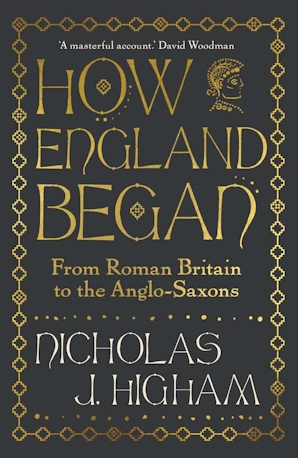
In his recent book, How England Began: From Roman Britain to the Anglo-Saxons, historian Nicholas J. Higham emphasises the importance of recognising this indigenous population. Archaeological and environmental evidence indicates considerable continuity in the management of the landscape, even where recognisably Roman buildings and material culture became less prominent. The inhabitants of post-Roman Britain were therefore not simply waiting to be displaced by newcomers; they remained active participants in the transformation of their society. 

Politically, Britain was increasingly fragmented. Regional rulers, military commanders and local landowning families competed for resources and authority, while communities faced threats from Irish raiders, Pictish groups and enemies operating along the North Sea coast. Some leaders may have attempted to preserve elements of Roman military organisation, including the employment of warriors from outside Britain.

It was within this unstable political environment, rather than in the aftermath of a complete demographic collapse, that migration from the continent became increasingly significant.

Affiliate Link • Learn more
Logo-PD26-Horizontal-White

Who Were the Angles, Saxons and Jutes?

The Anglo-Saxon migration and settlement of England

The Anglo-Saxon migration and settlement of England

People from Across the North Sea

The familiar division of the newcomers into Angles, Saxons and Jutes comes principally from the eighth-century historian Bede. Writing in his Ecclesiastical History of the English People, completed in 731, Bede identified three major continental peoples from whom the inhabitants of the early English kingdoms supposedly descended.

Those who came over were of the three most powerful nations of Germany: Saxons, Angles, and Jutes.

— Bede, Ecclesiastical History, Book I, Chapter 15, translated by J. A. Giles.

According to Bede, the Saxons originated from the region known as Old Saxony in northern Germany and became associated with the East Saxons, South Saxons and West Saxons. The Angles came from Angeln, in the Schleswig region of the modern German-Danish borderlands, and were regarded as the ancestors of the East Angles, Mercians and Northumbrians. The Jutes, traditionally linked with Jutland, were associated particularly with Kent, the Isle of Wight and parts of southern Hampshire.

These associations became deeply embedded in the conventional account of England’s origins. They also appeared to offer a convenient explanation for later political geography, with the names of kingdoms such as Essex, Sussex and East Anglia seemingly preserving the identities of the peoples who established them.

The difficulty is that Bede was writing nearly three centuries after the earliest migrations. His description reflects an understanding of ethnic origins shaped partly by the kingdoms existing in his time, while the archaeological evidence suggests that population movements were geographically less precise and not divided into three clearly distinguishable groups.

A More Complicated North Sea World

The North Sea region contained numerous communities linked by trading relationships, military service, marriage and shared cultural practices. Alongside groups identified as Angles, Saxons and Jutes, there were Frisians and other peoples from the continental coastal regions. Individuals from different communities could travel together, join the same military bands or settle among populations whose ancestry and traditions differed from their own.

Even Bede’s account contains evidence of this complexity. Elsewhere in his Ecclesiastical History, he acknowledged a broader range of continental peoples associated with the origins of the English, including Frisians, Rugians, Danes and others. Higham argues that the familiar threefold classification therefore risks imposing a later political and ethnic arrangement upon earlier movements that were considerably more varied.

Archaeological evidence also complicates the picture. Objects found in early medieval Kent reveal connections with several continental regions, including northern Gaul and the wider North Sea world. The material culture associated with the earliest communities does not always fit neatly within Bede’s geographical categories, nor does a particular style of jewellery or pottery necessarily establish the ancestry of its owner.

The terms Angle, Saxon and Jute remain useful historical descriptions, but they should not be understood as equivalent to three modern nationalities. Identities could change across generations, and the communities eventually known as English developed through relationships involving both continental newcomers and the established inhabitants of Britain.

Vortigern, Hengest and Horsa: How Reliable Is the Traditional Story?

Gildas and the Invitation to the Saxons

The traditional account of the migration begins with a decision that supposedly transformed Britain’s future. Facing attacks from northern enemies, a British ruler invited warriors from across the North Sea to defend his territory. These soldiers initially fought on behalf of their employers but eventually rebelled, turning their weapons against the communities that had recruited them to protect them.

Our earliest substantial surviving British account of these events comes from Gildas, whose De Excidio Britanniae, usually translated as On the Ruin of Britain, was composed during the sixth century. Gildas described the employment of Saxon warriors as a disastrous political mistake, made by a ruler whom he condemned as a proud tyrant.

They sealed its doom by inviting in among them (like wolves into the sheep-fold), the fierce and impious Saxons.

— Gildas, De Excidio Britanniae, Chapter 23, translated by J. A. Giles.

Gildas’s narrative describes how the newcomers demanded greater provisions, broke their agreement and launched devastating attacks. He presented the resulting destruction as divine punishment for the moral failures of Britain’s rulers and people. His account has understandably influenced generations of historians, but its religious purpose is essential to understanding what he wrote.

Gildas was not producing a military history in the modern sense. His work was a condemnation of contemporary wrongdoing, using biblical comparisons to explain the suffering of his people. His descriptions of widespread devastation may preserve memories of genuine warfare, but they were also deliberately shaped to communicate a moral argument.

An additional difficulty concerns the identity of the ruler who employed the Saxons. Although many older English translations identify him as Vortigern, sometimes inserting the name directly into the text, the standard reconstruction of Gildas’s account does not securely name him. The identification with Vortigern belongs to the wider historical tradition, and historians must distinguish that tradition from the evidence preserved by Gildas himself.

Hengist and Horsa arriving in Britain, as depicted by Richard Rowlands (1605)

Hengist and Horsa arriving in Britain, as depicted by Richard Rowlands (1605)

Bede and the Three Ships

Writing almost two centuries later, Bede developed the account into a more recognisable origin story. He placed the arrival of the newcomers around AD 449, describing three ships carrying warriors led by two brothers, Hengest and Horsa. According to his narrative, the Britons granted the newcomers land and provisions in exchange for military assistance, but additional arrivals eventually made them sufficiently powerful to challenge their employers.

Bede presented the episode as a foundational moment in the history of the English people. Hengest and Horsa became ancestral figures associated particularly with Kent, while later traditions developed elaborate genealogies tracing the origins of ruling families through successive generations of early leaders. The story helped explain both the emergence of particular kingdoms and the legitimacy of their rulers.

However, the narrative raises questions that the surviving written evidence cannot satisfactorily answer. Contemporary records do not independently confirm Hengest and Horsa, and the precise date of their supposed arrival remains uncertain. The Historia Brittonum, compiled in the ninth century, introduces additional episodes involving Vortigern and the Saxon leaders, but its chronology is inconsistent, while the later Anglo-Saxon Chronicle preserves traditions recorded several centuries after the events they describe.

Tony Sullivan, in The Early Anglo-Saxon Kings, examines these traditions in considerable detail, proposing possible chronologies for Hengest’s career and the emergence of Kentish kingship. His reconstruction illustrates how historians can attempt to reconcile conflicting sources, although the resulting dates and identifications remain hypotheses rather than independently established facts.

History Behind the Legend

It would be a mistake to dismiss the entire tradition simply because its details cannot be verified. The employment of foreign warriors was familiar within Roman military practice, and the political instability of fifth-century Britain provides a plausible setting for agreements between British leaders and continental military groups.

Nevertheless, a plausible historical setting does not establish that three particular ships arrived in 449 or that a single rebellion explains the wider transformation of Britain. Archaeological evidence indicates that continental material and burial customs were already appearing during the earlier fifth century, suggesting that migration began before the conventional date and developed through several different processes.

The story of Vortigern, Hengest and Horsa therefore remains valuable, not as a straightforward record of England’s foundation, but as evidence of how early medieval communities remembered and explained their origins.

Enjoyed this Article?

Join The Medieval Chronicle on Substack for weekly medieval discoveries, book notes, and behind-the-scenes commentary from HistoryMedieval.

From Hired Warriors to Settled Communities

Soldiers, Families and Farmers

The first substantial movements of continental warriors into post-Roman Britain may have developed from military arrangements established during the final decades of imperial rule. Roman authorities had long recruited soldiers from outside the empire, and Germanic-speaking individuals were already present within its armed forces. British leaders attempting to defend their territories after imperial administration weakened may have continued similar practices, employing experienced warriors in return for provisions, payment or land.

Such arrangements could easily have changed as political circumstances deteriorated. A military commander who initially served a British patron might acquire greater independence, especially if the authority of that patron weakened. Successful warriors could attract additional followers, establish control over land and develop their own networks of allegiance. In some regions, this process may have taken place through agreements with existing leaders; elsewhere, it could involve intimidation, seizure of property or outright warfare.

Migration was also much broader than the movement of armed men. Archaeological and genetic evidence indicates that women participated in population movements, while the development of permanent communities required households, agricultural labour, craft production and relationships with the surrounding population. Families could have followed earlier migrants, and children born in Britain might have maintained cultural and kinship ties with relatives across the North Sea.

A Process Lasting Generations

It’s unlikely that all these movements occurred in a single organised expedition. Some newcomers may have arrived as members of military groups, while others travelled through existing family connections or sought opportunities in settlements already established by people from the continent. The changing political landscape of northern Europe itself could also encourage movement, although the individual motives of most migrants remain beyond recovery.

The distinction between migration and settlement is important. Arrival was only the first stage; the lasting transformation occurred when newcomers established households, cultivated land, married, raised children and participated in the political life of their adopted regions.

By the sixth century, many individuals participating in recognisably continental traditions would have been born in Britain. Their identities were shaped not simply by the ancestral homelands remembered by Bede, but by the communities and political relationships that had developed around them.

Archaeology Reveals a Different Story

Written accounts provide much of the drama associated with the arrival of the Anglo-Saxons, but archaeology reveals the lives of people who seldom appear in medieval histories. Cemeteries, pottery, jewellery, houses and agricultural remains allow researchers to reconstruct patterns of settlement and cultural interaction that extend beyond the accounts of kings, warriors and battles.

Three sites are especially useful for understanding the different dimensions of this transformation: Spong Hill in Norfolk, Mucking in Essex and Oakington in Cambridgeshire.

Photo of the Spong Man pottery lid, on display at the Norwich Castle Museum and Art Gallery.

The Spong Man pottery lid is on display at the Norwich Castle Museum and Art Gallery.

Spong Hill: Evidence of Early Migration

The cemetery at Spong Hill, near North Elmham in Norfolk, is among the most important archaeological sites associated with the early Anglo-Saxon period. Excavations revealed more than 2,000 cremation burials alongside 57 inhumations, making it the largest early Anglo-Saxon cremation cemetery ever completely excavated in England.

Many cremated remains were deposited in pottery urns, sometimes accompanied by jewellery, combs or other objects. The burial practices and associated material have close parallels in northern Germany and other regions bordering the North Sea, demonstrating connections between the communities buried at Spong Hill and those living on the continent.

Perhaps the most significant finding concerns the cemetery’s chronology. Research led by Catherine Hills and Sam Lucy concluded that cremation burials began during the first quarter of the fifth century, earlier than the traditional arrival date given by Bede. The cemetery was therefore in use at a time when the political structures of Roman Britain were still undergoing profound change.

This does not mean that everyone buried at Spong Hill had personally crossed the North Sea. Burial customs could be maintained by descendants of migrants and adopted by people of different backgrounds. Indeed, Norfolk County Council’s archaeological review suggests that the cemetery population probably included individuals of both local and continental ancestry. Nevertheless, the date and character of the evidence make it difficult to explain the development of these communities without substantial contact and movement across the North Sea.

Spong Hill also reminds us that we should not always understand migration through the language of military conquest. Behind the decorated pottery were generations of people whose families maintained traditions, cared for their dead and established lasting communities in eastern Britain.

Mucking belt fittings

Mucking belt fittings

Mucking: The Landscape of Settlement

At Mucking in Essex, overlooking the Thames estuary, archaeological excavations revealed an extensive settlement occupied during the early Anglo-Saxon period. The site contained two cemeteries, at least 53 post-built timber structures and 203 sunken-featured buildings, making it one of the most comprehensively investigated settlements of its kind.

These buildings illuminate a society whose daily concerns extended well beyond warfare. Timber halls provided important spaces within households, while smaller sunken-featured structures were associated with activities that could include weaving, storage and other forms of domestic production. Their precise functions varied, and archaeologists no longer regard every such structure as necessarily a dwelling.

Mucking’s position near the Thames also illustrates the importance of waterways. Rivers connected coastal communities with inland agricultural districts, allowing goods, people and cultural influences to circulate. The settlement’s buildings and associated cemeteries reveal communities established over several generations, with households developing within a landscape that had a much longer history of occupation.

Although Roman and early Anglo-Saxon remains occur within the wider archaeological complex, their relationship must be interpreted carefully. The presence of both does not prove that one community passed directly into the other without interruption, nor does it demonstrate that the inhabitants were all immigrants. What Mucking provides is evidence of the development and organisation of early Anglo-Saxon settlement on a scale that is rarely visible in surviving written sources.

Oakington: Communities of Mixed Ancestry

The cemetery at Oakington, near Cambridge, offers an unusually personal perspective on the relationship between migrants and established British populations. In research published in 2016, Stephan Schiffels and colleagues examined ancient DNA from individuals excavated at sites in eastern England, including four women buried at Oakington during the fifth and sixth centuries.

The results revealed striking differences in ancestry. Two women possessed genetic profiles consistent with relatively recent continental ancestry; one was genetically closer to the earlier British population, and the fourth showed evidence of mixed ancestry. Yet their burial arrangements were remarkably similar, suggesting that people of differing origins could participate in a shared cultural community.

The most revealing detail concerns the relative wealth of the graves. The woman whose ancestry most closely resembled that of the earlier British population was buried with a substantial cruciform brooch, while one of the women with continental ancestry had no accompanying grave goods. These findings undermine any simple assumption that continental ancestry necessarily indicated higher social standing or that a British background meant exclusion from communities using Anglo-Saxon material culture.

Oakington cannot establish how typical such relationships were across Britain. Four individuals are too few to represent an entire population, and the cemetery reflects the circumstances of one locality. Nevertheless, it demonstrates that biological ancestry, burial customs and social identity did not always correspond neatly.

Together, Spong Hill, Mucking and Oakington provide three different perspectives on the migration: the arrival and transmission of continental traditions, the development of settled communities and the interactions between people of different ancestries. Their evidence moves the discussion beyond the familiar image of invading warriors and towards the creation of new societies.
Affiliate Link • Learn more

What Ancient DNA Reveals About the Migration

The Genetic Evidence for Large-Scale Migration

For much of the twentieth century, historians disagreed over how many people had crossed the North Sea. Some favoured substantial migration and population replacement, while others proposed that relatively small groups of militarily powerful newcomers had encouraged existing British communities to adopt their language and customs.

Both approaches attempted to explain a striking historical development: how a province that had belonged to the Roman world and whose inhabitants largely spoke Brittonic or Latin eventually became a collection of kingdoms dominated by Germanic languages and cultural traditions.

Ancient DNA has considerably changed this debate. In September 2022, a team including Joscha Gretzinger published a major study in Nature that analysed genetic evidence from 460 ancient individuals across north-western Europe, including 278 from England. Their findings demonstrated substantial migration from continental northern Europe during the early medieval period, with particularly strong connections to populations in what are now northern Germany and Denmark.

Among the early medieval English individuals studied, researchers estimated an average of up to approximately 76 per cent continental Northern European ancestry. However, this figure requires careful interpretation. It describes ancestry within the sampled population, not the proportion of Britain’s inhabitants who were immigrants, and the results varied considerably between regions, cemeteries and individuals. Some people possessed almost entirely continental ancestry, while others retained substantial ancestry associated with earlier British populations.

The study nevertheless provides strong evidence that migration was far more substantial than could be explained by the arrival of a handful of elite warriors. It also demonstrates that the populations of early medieval England were becoming genetically diverse through continuing interaction between newcomers and established communities.

Genetic ancestry does not, however, establish the language someone spoke, the political authority they recognised or the identity they claimed. A person with largely British ancestry might have participated fully in a community using Anglo-Saxon customs, while someone descended from continental migrants could have maintained relationships with neighbours who followed different traditions.

Migration Continued Beyond the Fifth Century

Further research has strengthened the argument that migration was a prolonged process. A large-scale isotopic study by Sam Leggett, Susanne Hakenbeck and Tamsin O’Connell, published online in December 2025, examined evidence of mobility across early medieval England between approximately AD 400 and 1100.

By analysing chemical signatures preserved in human remains, particularly teeth, researchers can investigate whether individuals spent their childhood in the same region where they were eventually buried. Unlike ancient DNA, which reveals patterns of ancestry, isotopic evidence can provide clues about an individual’s own geographical movements, although interpretation depends on local environmental conditions.

The study found that migration varied by region and period, with significant movement continuing during the seventh and eighth centuries. Men were more prominent among some groups of long-distance migrants, but women also moved in considerable numbers, particularly in regions including Kent, Wessex and the north-east. There was also evidence of mobility involving western Britain, Ireland and more distant parts of Europe.

These findings challenge the idea that Anglo-Saxon migration was a single episode confined to the middle of the fifth century. Instead, the evidence points towards continuing movement across a connected world, in which successive generations maintained relationships between Britain and continental Europe.

The implications are important for understanding the emergence of England. Population movement contributed to cultural change, but the relationship between the two was neither immediate nor uniform. New communities developed over time, sometimes maintaining distinctive traditions and sometimes incorporating people whose families had lived in Britain for generations.

Conflict and Resistance: The Britons Fight Back

Ambrosius Aurelianus and the British Response

The archaeological evidence for settlement and interaction should not obscure the violence associated with the transformation of post-Roman Britain. Military conflict appears prominently in the surviving written accounts, and the transfer of land and political authority undoubtedly involved struggles in which some communities lost their independence.

Gildas described a period of destruction following the rebellion of the Saxon warriors, but he also recorded a British response. Among those who resisted was Ambrosius Aurelianus, whom Gildas associated with surviving Roman ancestry and the organisation of military resistance. His account suggests that warfare continued for years, with victories achieved by both sides rather than an uninterrupted sequence of Saxon successes.

The character of this resistance remains difficult to reconstruct. Britain did not possess a single government capable of organising a unified national defence, and regional rulers may have had differing interests and alliances. Some British leaders probably opposed continental military groups, while others may have employed them or negotiated arrangements designed to preserve their own authority.

This complexity is important because later narratives often present the conflict as a simple struggle between two unified peoples. In reality, competing British rulers, migrant military leaders and communities of mixed background could all have participated in shifting political relationships.

The Battle of Badon

One of the most famous episodes in this period is the Battle of Mount Badon, generally placed around the end of the fifth or beginning of the sixth century, although its exact date and location remain uncertain. Gildas referred to a significant British success at Badon, which later writers developed into one of the decisive victories associated with resistance to the Saxons.

The battle eventually became closely connected with the legendary King Arthur, particularly through the Historia Brittonum and later medieval literature. Yet Gildas does not identify Arthur as the commander at Badon, and the surviving evidence does not allow historians to confirm his participation. The battle and the Arthurian traditions associated with it must therefore be treated separately.

Higham offers a challenging interpretation of Badon’s significance. Rather than regarding it as the final British victory that halted Saxon expansion, he argues that it may have been an important success within a wider conflict whose ultimate political consequences were less favourable to the Britons. This reading is not universally accepted, but it illustrates the difficulties of reconstructing military events from sparse and rhetorically complex sources.

What can be said with greater confidence is that the expansion of communities associated with continental migrants was geographically uneven. Some regions experienced settlement and the extension of new political authority comparatively early, while others retained indigenous traditions and leadership for much longer.

The transformation of Britain was therefore neither a uniform conquest nor an entirely peaceful process of cultural exchange. It combined warfare, negotiation, resistance and accommodation, with outcomes that differed across the island.

Affiliate Link • Learn more

From Migrants to the First English Communities

Intermarriage, Assimilation and Social Change

Over the fifth and sixth centuries, the distinction between newcomers and established inhabitants became increasingly complicated. Families formed, communities expanded, and successive generations developed identities shaped by the political and social circumstances of Britain rather than solely by ancestral connections across the North Sea.

Intermarriage was one means through which these relationships developed, as the genetic evidence from Oakington demonstrates. Exchange, shared agricultural activity and participation in the same communities may also have encouraged people to adopt unfamiliar practices. Religious customs, clothing, burial traditions and language could change gradually, sometimes under the influence of neighbours and sometimes in response to the preferences of powerful local leaders.

However, assimilation should not be imagined as necessarily equal or voluntary. Control over land and military resources could place migrant-descended groups in positions of considerable authority, allowing them to influence the customs and identities of populations under their control. British landowners might lose their property, families could become dependent upon new rulers, and some inhabitants were undoubtedly enslaved or compelled to provide labour and tribute.

Higham places considerable emphasis on these unequal relationships. He suggests that communities identifying with continental traditions could enjoy privileged legal and economic positions, while indigenous populations continued to cultivate much of the countryside. Their presence might be archaeologically difficult to recognise precisely because they did not always participate in the burial practices and material culture most readily identified as Anglo-Saxon.

This interpretation also challenges the assumption that the appearance of new burial customs necessarily indicates the arrival of entirely new populations. People may have adopted cultural practices associated with the dominant community without abandoning all aspects of their earlier lives.

The relationship between ancestry, identity and status was therefore complex. Migration created new opportunities and political structures, but the societies that emerged contained people of different backgrounds whose participation in those structures could be shaped by both choice and necessity.

Why Did English Replace Brittonic in Much of Lowland Britain?

Perhaps the most enduring consequence of these transformations was linguistic. Roman Britain had contained speakers of Brittonic, the Celtic language from which Welsh and Cornish would eventually develop, alongside Latin used in administration, religion and other contexts. By the early medieval period, however, Germanic languages introduced or reinforced by continental migrants were becoming dominant across much of southern and eastern Britain.

Old English belonged to the West Germanic language family and developed through the interaction of related linguistic traditions brought from the continent. Its emergence was not the consequence of a single group imposing a fully formed language upon the island. Rather, language change occurred over generations as communities adopted, adapted and transmitted forms of speech increasingly associated with regional political and social power.

The relatively limited survival of Brittonic vocabulary within Old English has sometimes been interpreted as evidence that the indigenous population was largely displaced. Yet language change does not necessarily require population replacement. People can abandon the language of their ancestors when political authority, social advancement or access to resources favours another language.

The linguistic landscape also preserves traces of earlier inhabitants. Several major river names, including Thames and Avon, retain pre-English elements, while other place names reveal connections with Roman or Brittonic traditions. Their survival demonstrates that the cultural transformation was not complete, even in regions where English eventually became dominant.

In Western and Northern Britain, Brittonic languages and identities remained more resilient. Communities in Wales and Cornwall maintained linguistic traditions that would survive long after the political emergence of English kingdoms, while the development of Brittonic-speaking societies elsewhere followed different regional paths.

Higham draws particular attention to the contrast between Britain and continental Gaul. In Gaul, the Franks established political dominance but gradually adopted the Latin-derived language of much of the population. In lowland Britain, the opposite development occurred, with Germanic languages eventually replacing Brittonic across extensive territories. Understanding why this happened remains one of the central questions surrounding England’s origins.

The answer probably lies in a combination of demographic change, military power, political structures and the opportunities associated with belonging to new communities. No single factor adequately explains the linguistic transformation of the entire country.

The Emergence of New Kingdoms

As settlement expanded and regional political relationships changed, increasingly powerful leaders emerged within communities associated with Anglo-Saxon traditions. Their authority depended upon military followers, control of resources, networks of allegiance and the ability to establish relationships with neighbouring rulers.

The emergence of kingdoms such as Kent and East Anglia was consequently a gradual development rather than the immediate result of the first continental arrivals. Some early rulers may have inherited or adapted territorial structures connected with Romano-British society, while others consolidated smaller political communities through warfare and alliances.

Kent offers an especially interesting example. Its name preserved a connection with the earlier inhabitants known to the Romans as the Cantiaci, suggesting that older regional identities could survive political transformation. Yet Kent also developed strong continental connections, particularly with the Frankish world, and its later rulers maintained relationships that extended across the Channel.

Sullivan’s examination of early Kentish kingship illustrates the difficulties of separating reliable historical evidence from later genealogical tradition. Figures such as Hengest and Oisc occupy important places within the accounts of the kingdom’s origins, but the surviving documentation becomes more secure only as we approach the late sixth century and the reign of Æthelberht.

Other regions followed different paths. Archaeological evidence suggests that powerful local communities emerged from networks of settlements and military leadership, gradually developing more elaborate forms of kingship. The increasing wealth visible in certain burials and settlements during the later sixth century reflects these changing social hierarchies.

Yet it would be misleading to imagine that the familiar seven kingdoms of the later Anglo-Saxon period already existed in fully developed form by AD 500. Their formation occurred through generations of political competition and territorial consolidation, and the balance of power continued to change well beyond the period of the initial migrations.

By the end of the sixth century, much of lowland Britain had undergone a fundamental cultural and political transformation. Nevertheless, the England familiar from later medieval history had not yet emerged. What existed was a varied landscape of developing kingdoms, regional communities and competing identities, shaped by the descendants of migrants and the enduring presence of Britain’s earlier population.

Affiliate Link • Learn more

The Migration That Made England Possible

The arrival of the Angles, Saxons and Jutes was one of the defining developments in the history of early medieval Britain, but its significance cannot be understood through the traditional image of three peoples arriving to conquer a deserted island. Britain remained inhabited, politically contested and culturally diverse throughout the period, while migrants from the continent entered a world whose communities and institutions had already been undergoing profound change.

Archaeology and ancient DNA have made it increasingly difficult to deny the scale of migration from northern Europe. At the same time, they reveal that newcomers interacted with established populations through relationships that included military service, settlement, marriage, trade, political domination and conflict. The resulting societies were neither entirely foreign creations nor simple continuations of Roman Britain.

What I find particularly revealing is how differently the evidence speaks to us. Written histories preserve the ambitions of rulers and the fears of communities facing invasion, while cemeteries and settlements reveal the quieter processes through which people established households, adapted their customs and shaped new identities. Neither form of evidence tells the complete story, but together they bring us closer to understanding the lives behind the traditional accounts.

England was not created when three peoples crossed the North Sea. Its foundations emerged over generations, as migrants and the inhabitants of post-Roman Britain contested power, shared landscapes and developed the societies from which the early English kingdoms would eventually arise.

The next stage of that transformation would be political as well as cultural, as increasingly powerful rulers competed to turn scattered communities into kingdoms.

Affiliate Link • Learn more

Frequently Asked Questions

Who were the Angles, Saxons and Jutes?

They were groups associated with continental northern Europe who migrated to Britain during the fifth and sixth centuries. Bede traditionally identified the Angles with the Schleswig region, the Saxons with northern Germany and the Jutes with Jutland, although archaeological research suggests more complicated origins and movements.

When did the Anglo-Saxons first arrive in Britain?

Bede traditionally dated their arrival to around AD 449, but archaeology suggests that movement from the continent began earlier. Evidence from Spong Hill in Norfolk indicates that continental-style cremation burials were already taking place during the first quarter of the fifth century.

Did the Anglo-Saxons conquer or peacefully settle in Britain?

Both warfare and settlement contributed to the transformation of post-Roman Britain. Some newcomers may initially have served British rulers as soldiers, while others established agricultural communities, and subsequent generations experienced conflict, political accommodation and cultural assimilation.

What happened to the native Britons?

The indigenous British population did not simply disappear. Many communities continued to occupy and cultivate the countryside, although some inhabitants experienced displacement, enslavement or political subordination, while others became incorporated into societies increasingly associated with Anglo-Saxon traditions.

What does ancient DNA reveal about Anglo-Saxon migration?

Genetic research published in 2022 demonstrated substantial continental northern European ancestry among sampled early medieval populations in England. It also revealed considerable variation between individuals and regions, supporting a history of significant migration and interaction rather than a single, uniform process of population replacement.

How did the migrations contribute to the creation of England?

The migrations introduced and reinforced continental languages, customs and political traditions, which interacted with those of existing British communities. Over several generations, new regional identities and centres of power developed, eventually contributing to the emergence of early English kingdoms.

Recommended Reading

This website uses affiliate links. If you purchase via these links, we might earn a commission that contributes to sustaining the HistoryMedieval.com platform.

How England Began by Nicholas J. Higham
How England Began: From Roman Britian to the Anglo-Saxons by Nicholas J. Higham
The Early Anglo-Saxon Kings by Tony Sullivan
Britain after Rome - The Fall and Rise, 400 - 1070 - Anglo-Saxon Britain by Robin Fleming
Affiliate Link
2026 Weekly Planner - St. Barts
Affiliate Link • Learn more

Sources & References

Principal Historical Works

Primary Historical Sources

  • Bede. (c. 731). Ecclesiastical History of the English People, Book I, Chapter 15. English translation reproduced in the Internet Medieval Sourcebook, Fordham University.
    https://sourcebooks.web.fordham.edu/basis/bede-book1.asp
  • Bede. (1969). Bede’s Ecclesiastical History of the English People (B. Colgrave & R. A. B. Mynors, Eds. & Trans.). Clarendon Press.
  • Gildas. (c. sixth century). De Excidio Britanniae (On the Ruin of Britain), Chapters 23–26. English translation principally by J. A. Giles (1848), reproduced in the Internet Medieval Sourcebook, Fordham University.
    https://sourcebooks.web.fordham.edu/source/gildas.asp
  • Gildas. (1978). The Ruin of Britain and Other Works (M. Winterbottom, Ed. & Trans.). Phillimore.
  • Historia Brittonum (History of the Britons). (c. early ninth century). Traditionally attributed to Nennius. English translation reproduced in the Internet Medieval Sourcebook, Fordham University.
    https://sourcebooks.web.fordham.edu/basis/nennius-full.asp

Archaeological and Genetic Research

  • Gretzinger, J., Sayer, D., Justeau, P., et al. (2022). The Anglo-Saxon migration and the formation of the early English gene pool. Nature, 610, 112–119.
    https://doi.org/10.1038/s41586-022-05247-2
  • Hamerow, H. (1993). Excavations at Mucking, Volume 2: The Anglo-Saxon Settlement. English Heritage Archaeological Report 21. English Heritage.
  • Hills, C., & Lucy, S. (2013). Spong Hill, Part IX: Chronology and Synthesis. McDonald Institute for Archaeological Research, University of Cambridge.
    https://www.arch.cam.ac.uk/mcdonald-institute-monographs/2011
  • Leggett, S., Hakenbeck, S., & O’Connell, T. C. (2025). Large-scale isotopic data reveal gendered migration into early medieval England c. AD 400–1100. Medieval Archaeology, 69(2), 280–308.
    https://doi.org/10.1080/00766097.2025.2583016
  • Lucy, S. (2016). Odd goings-on at Mucking: Interpreting the latest Romano-British pottery horizon. Internet Archaeology, 41.
    https://doi.org/10.11141/ia.41.6
  • Schiffels, S., Haak, W., Paajanen, P., Llamas, B., Popescu, E., Loe, L., Clarke, R., Lyons, A., Mortimer, R., Sayer, D., Tyler-Smith, C., Cooper, A., & Durbin, R. (2016). Iron Age and Anglo-Saxon genomes from East England reveal British migration history. Nature Communications, 7, Article 10408.
    https://doi.org/10.1038/ncomms10408

Archaeological Records and Research Resources

Additional Historiographical Perspective

  • Hines, J. (2026). Re-assessing the foundations of the Anglo-Saxon period – and re-setting the tone of debate. The Antiquaries Journal. Published online 2 October 2026.
    https://doi.org/10.1017/S0003581526100638

Copyright, Licensing and Disclosure

© HistoryMedieval. This article is licensed under the Creative Commons Attribution–NonCommercial–NoDerivatives 4.0 International licence (CC BY-NC-ND 4.0).

You may share this article unchanged for non-commercial purposes, provided that full credit is given to the author and HistoryMedieval, a link to the licence is included, and online republication links back to the original article on HistoryMedieval.com. Adaptation, translation, abridgement or commercial reuse requires prior written permission.

Third-party images and materials may be subject to separate copyright or licensing terms. For copyright concerns, contact info@historymedieval.com. We will review the matter and take any necessary corrective action.

This article may contain affiliate links. We may earn a commission from qualifying purchases at no additional cost to the buyer.

Affiliate Link • Learn more
image_printPrint Article
Home » History » Medieval Britian » Angles, Saxons and Jutes: A New History of Migration
AD18W5E-US2024DB203_PrimeDay2025_Tabletop_Hibiscus_PD_1_GIF_lh_v1_Alt4 1
JOIN THE NEWSLETTER
We’re honored to be named one of FeedSpot’s Top 20 Medieval History Blogs.
Affiliate Link • Learn more