
Best Medieval History Books – July 2026
- Luciano Anastasi
- 12 July 2026
- 0 Comment
- 6 Min Read
Editor’s Picks This Month at a Glance
The best medieval history books for July 2026 take readers from the courts of Mercian kings and Burgundian dukes to the intricate politics of the Holy Roman Empire. Together, these five works reveal a medieval world that was connected, mobile and culturally diverse.
Peter H. Wilson’s monumental history explains how the Holy Roman Empire survived for almost a thousand years despite its decentralised political structure. Bart Van Loo transforms the rise and fall of Burgundy into an energetic story of dynastic ambition, courtly splendour, urban wealth and military catastrophe. Anthony Bale follows medieval travellers across Europe, Africa and Asia, uncovering the practical advice, wonders and misconceptions they carried with them.
The Viking world receives an equally ambitious treatment in Neil Price’s The Children of Ash and Elm. Combining archaeology with written evidence, Price explores Norse religion, identity, gender, trade, warfare and settlement while moving beyond familiar images of raiders and warriors.
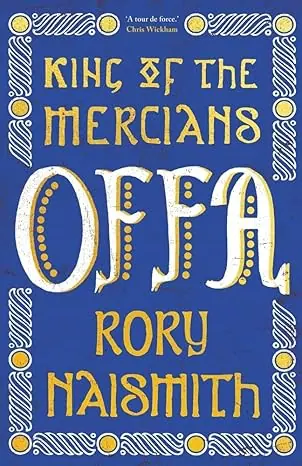
Completing the collection is Rory Naismith’s Offa: King of the Mercians, an important new biography of one of Anglo-Saxon England’s most powerful yet elusive rulers. Naismith shows how Offa strengthened Mercian supremacy, cultivated an image of Christian kingship and influenced the political development of England.
Spanning political history, biography, archaeology, travel and cultural exchange, these books offer authoritative but engaging introductions to some of the medieval period’s most fascinating societies.
Wilson explains the empire’s tangled institutions, peoples and ideals, revealing why this decentralised polity remained central to history for centuries.
Van Loo revives Burgundy’s dukes, court culture and political ambitions, tracing a brilliant late-medieval power that disappeared from Europe’s map.
Bale explores how medieval travellers imagined roads, cities and peoples, mixing practical advice, pilgrimage, commerce and adventure together.
Price presents the Viking world through archaeology, belief and experience, moving beyond raiders to families, traders, enslaved people and settlers.
Naismith restores Mercia’s greatest king, showing how Offa reshaped Anglo-Saxon power, royal identity, diplomacy, coinage and kingship across England.
Why We Chose These Medieval Reads
Political History
Peter H. Wilson dismantles the familiar joke that the Holy Roman Empire was neither holy, Roman, nor an empire. Instead, he reconstructs a resilient political system that linked emperors, princes, cities, bishops and ordinary communities across Central Europe. The book moves thematically through legitimacy, governance, warfare, religion, identity and everyday life, explaining how the empire survived repeated crises without becoming a centralised state. Dense but rewarding, it is the strongest single-volume choice for readers seeking depth rather than a simple royal chronology. Its scale makes it ideal as the authoritative selection for the Holy Roman Empire in a serious medieval reading list.
Bart Van Loo tells the rise and fall of the Valois dukes of Burgundy, whose territories linked parts of France, Belgium, the Netherlands and Luxembourg. Through Philip the Bold, John the Fearless, Philip the Good and Charles the Bold, he recreates a court famous for ceremony, wealth, art and ruthless diplomacy. The story combines dynastic marriages, assassinations, urban prosperity and battlefield catastrophe while explaining Burgundy’s role in forming the Low Countries. Van Loo’s energetic storytelling makes a complicated political geography memorable. With hundreds of thousands of copies sold across Europe, the book brings genuine international bestseller appeal to the selection.
Cultural History
Anthony Bale reconstructs medieval travel through guidebooks, pilgrim accounts, maps, legends and instructions circulated among people taking to the road. His travellers cross Europe, the Mediterranean and routes extending toward Africa and Asia for pilgrimage, trade, diplomacy and war. The book shows that medieval mobility was far greater than stereotypes suggest, while also examining the fears, fantasies and prejudices travellers carried with them. Bale balances humour with careful scholarship, moving from accommodation and phrasebooks to holy sites, monsters and misunderstood cultures. It is an ideal summer choice: intellectually substantial, geographically expansive and structured like an imaginative journey through another world.
Archaeologist Neil Price offers a reconstruction of the Viking world from its Scandinavian foundations to its expansion across Europe and beyond. He gives attention to cosmology, ritual, gender, slavery, households and emotional life, showing how Viking communities understood themselves before explaining how they travelled, traded, raided and settled. Archaeological evidence drives the narrative, allowing ships, graves, objects and landscapes to speak alongside written sources. The result is detailed, unsettling and far richer than a conventional military history. Named a Times and Sunday Times History Book of the Year, it is an ambitious choice for readers seeking depth and archaeological perspective.
Rory Naismith reconstructs the reign of Offa, king of Mercia from 757 to 796, and challenges his reputation as merely the builder of Offa’s Dyke. Drawing on charters, coins, chronicles and material evidence, he shows how Offa strengthened Mercian power, cultivated royal authority and engaged with rulers across Britain and continental Europe. The biography places an elusive king within the political, religious and economic transformations of eighth-century England. Naismith presents Offa as an ambitious, calculating and influential monarch whose methods shaped later ideas of English kingship. It is a major reassessment of one of Anglo-Saxon England’s most consequential rulers today.
License & Copyright
The copyright holder has published this content under the following license: Creative Commons Attribution-NonCommercial-ShareAlike. This license lets others remix, tweak, and build upon this content non-commercially, as long as they credit the author and license their new creations under the identical terms. When republishing on the web a hyperlink back to the original content source URL must be included. Please note that content linked from this page may have different licensing terms.
If I have mistakenly misused any of your content, artwork, images, or videos, please contact me on historymedieval62@gmail.com and I will take the necessary corrective action.
This website uses affiliate links. If you purchase via these links, we might earn a commission that contributes to sustaining the HistoryMedieval.com platform.
Luciano Anastasi
Luciano is the founder of the MedievalHistory platform and the LinkedIn History Enthusiasts Group, where he is dedicated to curating and sharing high-quality medieval history content. His goal is to engage scholars, teachers, students, and enthusiasts by fostering insightful discussions and promoting scholarly resources on topics from medieval warfare and religion to societal transformations and daily life in the Middle Ages.
Luciano is also an active book reviewer, focusing on academic publications related to medieval history. He recently collaborated with Yale University Press to review forthcoming medieval history titles, aiming to deepen educators' and researchers' understanding of the period. Alongside his history endeavors, he has over 40 years of experience in IT leadership roles across various industries, including the public sector, banking, insurance, airlines and consulting, and has contributed to United Nations projects.
With a Master of Arts in Business Process Management, Luciano combines his expertise in IT strategy and governance with his passion for medieval history. He leverages technology to bridge the academic community and the wider public, making historical scholarship more accessible through engaging online content.




