Best Medieval History Books – September 2026

image_printPrint Article

Editor’s Picks This Month at a Glance

Timebound’s Editor’s Picks are designed to help readers find medieval-history books that are not only worth reading but also offer different ways of understanding the Middle Ages. Each month, we select five titles that combine strong storytelling, historical value and accessibility, with enough variety to appeal to both dedicated medievalists and readers simply looking for their next engaging history book.

The September selection deliberately ranges across subjects, periods and approaches. Some of these books focus closely on individuals or institutions; others take a much broader view of the medieval world. Together, they move from the reign and reputation of Henry V to the organisation of crusader armies, and from medieval ideas about women and gender to sweeping interpretations of Europe and the wider world.

Not every Editor’s Pick needs to be a brand-new release. Timebound also highlights older books that remain relevant, readable and useful years after publication. A strong medieval-history book can continue to find new readers long after its first appearance, particularly when it challenges familiar assumptions, introduces an important debate or offers an especially engaging route into a complex subject.

This month’s five selections reflect that balance. Dan Jones offers a fresh look at one of England’s most famous warrior kings. Eleanor Janega examines the beliefs and expectations surrounding medieval women. Susan Wise Bauer places medieval history within a much wider global setting, while Matthew Gabriele and David M. Perry challenge the enduring idea of the Middle Ages as simply a “Dark Age”. Steve Tibble, meanwhile, turns to the practical realities of warfare in the crusader states.

Taken together, September’s Editor’s Picks show just how broad medieval history can be: kingship, warfare, gender, religion, politics and global connections all sit within the same remarkable thousand-year story.

Dan Jones revisits England’s famous warrior king, tracing Henry V’s political apprenticeship, kingship, Agincourt triumph, French ambitions, contradictions, and enduring historical reputation beyond Shakespeare.

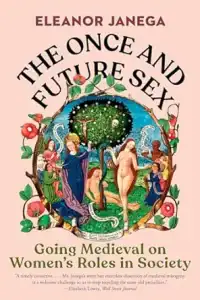
Eleanor Janega explores medieval ideas about women’s beauty, sexuality, motherhood and work, contrasting male prescriptions with the varied lives women actually led across society.

Susan Wise Bauer tells a sweeping global medieval story, linking religion, kingship and warfare across Europe, Asia, the Middle East and the wider world.

Matthew Gabriele and David M. Perry challenge the ‘Dark Ages’ stereotype, revealing a medieval Europe marked by creativity, exchange, violence, belief and human complexity.

Steve Tibble closely reassesses crusading warfare between 1099 and 1187, comparing Western and Muslim armies, strategy, adaptation, military orders, castles, sieges and battlefield practice.

Why We Chose These Medieval Reads

Dan Jones approaches Henry V as both a formidable medieval king and a man whose reputation has long been shaped by victory and legend. The book follows Henry from his political and military apprenticeship through his accession in 1413, his campaigns in France, and the triumph at Agincourt. Jones also examines the less comfortable parts of his kingship: brutality, misjudgements, rebellion and the consequences of English expansion. Written for a broad audience, this is a lively biography that looks beyond Shakespeare’s heroic image while explaining why Henry’s short reign left such a powerful mark on later English history and memory.

Matthew Gabriele and David M. Perry set out to challenge the familiar image of the Middle Ages as a thousand years of darkness, ignorance and stagnation. Their narrative highlights artistic achievement, architecture, religious life, cultural exchange and intellectual creativity while acknowledging warfare, persecution, disease and inequality. Moving across medieval Europe and its neighbours, the authors argue that the period was neither uniformly bleak nor a simple waiting room for the Renaissance. The book suits general readers because it uses vivid examples and an accessible style to question enduring assumptions about what “medieval” means and why those assumptions still matter today.

Eleanor Janega asks how medieval people understood women and how far those ideas matched women’s actual lives. She explores beliefs about beauty, sexuality, motherhood and female behaviour, drawing attention to the influence of classical thought and Christian theology on male writers. Against these expectations, Janega places women who worked as farmers, brewers, textile workers, artists and artisans, as well as figures such as Eleanor of Aquitaine and Hildegard of Bingen. The result is an accessible, often provocative study of the gap between prescription and experience, while also asking readers to consider how ideas about gender change, survive and reappear.

Susan Wise Bauer offers an ambitious narrative stretching from the conversion of Constantine to the First Crusade. Rather than treating medieval history as a European story alone, she follows political and religious change across Europe, the Middle East, Asia and beyond. A central theme is the way rulers increasingly used religion to support claims to authority, whether Christian, Islamic or drawn from other traditions. The book moves between emperors, kings, generals and competing states, connecting familiar events such as Charlemagne’s coronation with developments elsewhere. Its broad geographical range makes this a useful choice for readers seeking a wide medieval overview.

Steve Tibble examines the armies that fought in and around the crusader states between 1099 and 1187, treating warfare as a problem of strategy, resources and adaptation rather than as a simple religious confrontation. Drawing on Western and Muslim sources as well as archaeological evidence, he compares the organisation and methods of opposing forces. Templars, hospitalers, cavalry, infantry, fortifications, sieges and frontier warfare all form part of the picture. Tibble’s central interest is how armies learned from circumstances and enemies over time. The result is a detailed but readable study of crusading warfare before Saladin’s victory at Hattin transformed the political landscape.

Copyright, Licensing and Disclosure

© HistoryMedieval. This article is licensed under the Creative Commons Attribution–NonCommercial–NoDerivatives 4.0 International licence (CC BY-NC-ND 4.0). It may be shared unchanged for non-commercial purposes, provided that HistoryMedieval is credited and a link to the original article is included. Adaptation, commercial use and unauthorised AI reuse are prohibited.

Third-party images and materials may be subject to separate copyright terms. This article may contain affiliate links or clearly identified sponsored content.

If you believe that any text, artwork, photograph, video or other material published in this article infringes your copyright, please contact info@historymedieval.com, identifying the material concerned and the relevant article URL. We will investigate the matter and, where appropriate, take prompt corrective action.

image_printPrint Article