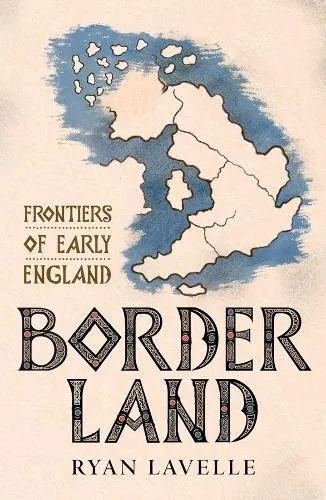
Border Land: Frontiers of Early England by Ryan Lavelle
Authors
Ryan Lavelle
Publisher
Yale University Press
SYNOPSIS
Ryan Lavelle’s Border Land: Frontiers of Early England offers an original and intellectually stimulating reassessment of the formation of England by examining its geographical, political, cultural and maritime frontiers. Rather than presenting English unification as the inevitable culmination of centuries of Anglo-Saxon expansion, Lavelle approaches the subject from the margins, exploring how boundaries were established, negotiated, contested and repeatedly redefined throughout the early Middle Ages.
Beginning with the territorial perceptions of early medieval Britain, the book takes readers on a geographical journey through the south-western territories of Wessex and Dumnonia, the Anglo-Welsh frontier, the Danelaw, Northumbria and the maritime boundaries of the North Sea and English Channel. Its chronological reach extends beyond the Norman Conquest, examining how the changing relationship between England and Normandy further transformed perceptions of territorial sovereignty.
Drawing upon royal charters, legal agreements, ecclesiastical histories, chronicles, archaeological evidence, place-names and the physical landscape, Lavelle demonstrates that medieval borders were rarely the permanent dividing lines familiar from modern political maps. They were often areas of interaction in which competing political authorities, cultural identities and economic interests overlapped.
The book challenges several deeply rooted assumptions about English history, particularly the portrayal of Alfred the Great and Æthelstan as architects of an enduring and indivisible English kingdom. Lavelle does not diminish their achievements but places them within the political realities and limitations of their times.
VERDICT: Border Land is an exceptionally well-researched and conceptually ambitious contribution to early medieval scholarship. Although its density of geographical and documentary detail occasionally demands considerable concentration, it offers a rewarding and persuasive alternative to conventional narratives of England’s formation. It is highly recommended for readers seeking a deeper understanding of Anglo-Saxon England, medieval kingship and the historical nature of borders.
GET YOUR COPY
Rated 4.6 out of 5
Genre: Medieval England |
Publication Date: 10 November 2026 |
ISBN: 9780300259582 |
Extent: 384 pages |
Affiliate links may earn us a commission to support HistoryMedieval.com.
OVERVIEW
Understanding England through its frontiers
The central premise of Border Land is that one cannot fully understand England by examining only its kings, political centres and territorial expansion. Equal attention must be paid to the edges of royal authority, where ambitions encountered resistance, political relationships were negotiated and the practical limitations of government became apparent.
Lavelle explains in his preface that the origins of the book lie partly in the renewed attention given to borders during the Brexit process in 2019. This contemporary background provides an intellectual starting point rather than a political framework imposed upon the medieval past. His objective is to demonstrate that England’s frontiers have a considerably more complicated history than modern geographical familiarity might suggest.
One of the book’s most imaginative features is its organisation. Instead of following a strictly chronological narrative, Lavelle takes readers on an approximately clockwise circuit of early medieval England, inspired by the practice of describing estate boundaries in Anglo-Saxon land charters. This geographical approach allows individual frontier regions to retain their distinctive historical characteristics while contributing to a wider interpretation of English state formation.
From Augustine’s Oak to Offa’s Dyke
The opening chapters establish the importance of boundaries in early medieval society, examining how landscapes, religious beliefs, legal documents and collective memory influenced perceptions of territory. Trees, rivers, ancient monuments and earthworks were not simply physical features; they could also acquire considerable political and symbolic significance.
An especially interesting example is Augustine’s early seventh-century meeting with British churchmen at a location remembered by Bede as Augustine’s Oak. Lavelle examines the significance of meeting at a frontier location, where ecclesiastical authority, political influence and the possibility of neutral ground intersected. The episode becomes more than a disagreement over religious practices; it illustrates how boundaries could provide opportunities for negotiation while simultaneously revealing competing claims to authority.
The subsequent examination of Wessex and Dumnonia challenges simplistic interpretations of Anglo-Saxon westward expansion. Lavelle demonstrates that the emergence of the River Tamar as a territorial boundary did not produce an immediate or complete separation between Brittonic and English communities. Political domination, linguistic survival, economic relationships and regional identities continued to complicate the frontier.
His treatment of Offa’s Dyke is equally compelling. Rather than interpreting the monumental earthwork exclusively as a defensive barrier, Lavelle considers its capacity to project Mercian royal authority, consolidate territorial influence and communicate political dominance to neighbouring kingdoms.
The Danelaw and the northern frontier
The chapters addressing the Danelaw and Northumbria are particularly relevant to the conventional narrative of England’s unification.
Lavelle re-examines the treaty between Alfred the Great and Guthrum, arguing that its territorial provisions should primarily be understood within the political circumstances of the late ninth century. Instead of representing a predetermined stage towards English unity, the agreement revealed the limitations of West Saxon authority and the need to accommodate competing political interests.
The northern frontier provides further evidence of the fragility of English territorial ambitions. Northumbria, the kingdom of Alba, Strathclyde, Scandinavian rulers, and powerful regional aristocrats created a political landscape in which authority frequently overlapped and contested. Lavelle consequently challenges the assumption that Hadrian’s Wall represented a natural or enduring division between English and Scottish territories.
Even Æthelstan’s celebrated assertion of supremacy in 927 is treated with appropriate caution. His achievements were considerable, but the political settlement he established remained vulnerable to subsequent developments.
Maritime frontiers and the fragility of English unity
The inclusion of the North Sea and English Channel considerably expands the book’s intellectual scope. These waters were not merely geographical barriers protecting England from external threats; they were also networks of commerce, migration, religious communication and political influence.
Lavelle demonstrates how maritime connectivity simultaneously strengthened kingdoms and exposed them to external intervention. The Norman Conquest subsequently reconfigured these relationships, establishing a political connection across the Channel without necessarily creating a unified territorial state.
Perhaps the most consequential argument appears in the final chapter, where Lavelle identifies five occasions during the century following Æthelstan’s death when the territory of the English kingdom was divided. The division between Eadwig and Edgar in 957 provides a particularly revealing example of the continued political significance of the older kingdoms of Wessex and Mercia.
The resulting interpretation presents English unification as a contingent and reversible historical achievement, rather than as an inevitable progression towards the modern nation.
An original, intellectually rewarding and meticulously researched work of medieval history, particularly recommended for readers who wish to move beyond conventional narratives of England’s unification and discover how shifting frontiers, competing identities and political negotiations shaped the emergence of the English kingdom.
Compare Prices & Get Your Copy
Enjoyed this Article?
Join The Medieval Chronicle on Substack for weekly medieval discoveries, book notes, and behind-the-scenes commentary from HistoryMedieval.
CRITICAL EVALUATION
Contributions
An original approach to the making of England
Lavelle’s greatest achievement lies in his ability to make geographical boundaries central to the interpretation of political history. Whereas conventional accounts of Anglo-Saxon England frequently concentrate on the expansion of Wessex, the defeat of Scandinavian rulers and the emergence of a unified monarchy, Border Land demonstrates that the construction of England was equally dependent upon accommodation, negotiation and the management of regional differences.
His argument is particularly persuasive because it does not seek to replace one historical certainty with another. Lavelle acknowledges the achievements of English kingship while questioning the assumption that territorial unity was necessarily permanent or universally accepted.
The distinction between royal ambition and effective political authority is one of the book’s most valuable contributions. A monarch might claim supremacy over an extensive territory without possessing the administrative resources or local support necessary to exercise consistent control over it.
Excellent engagement with primary sources
The scholarly foundations of the book are particularly impressive. Lavelle draws extensively upon Bede’s Ecclesiastical History, the Anglo-Saxon Chronicle, Asser’s Life of King Alfred, Anglo-Saxon charters, Domesday Book, Welsh historical sources and the writings of William of Malmesbury.
Importantly, these sources are not simply reproduced as authoritative accounts. Lavelle examines the political circumstances in which they were produced, their retrospective interpretations and the limitations of their testimony.
His discussion of the Micheldever charter, for example, illustrates how even a forged tenth-century document can provide valuable evidence about contemporary perceptions of landholding and territorial boundaries. Its detailed descriptions of ancient earthworks, trees, waterways and other landmarks reveal the importance of geographical knowledge within medieval communities.
Similarly, his treatment of the Alfred–Guthrum treaty questions the tendency to interpret ninth-century political decisions through knowledge of what subsequently occurred in the tenth century. This resistance to historical hindsight is one of the book’s methodological strengths.
The integration of archaeology and historical geography
Another significant achievement is Lavelle’s integration of documentary evidence with archaeology, topography, numismatics and place-name studies. The physical landscape becomes an important historical source in its own right.
His examination of Offa’s Dyke, for instance, situates the monument within scholarly debates concerning its construction, defensive capabilities and symbolic projection of political authority. Lavelle recognises that its impressive scale does not necessarily indicate a permanently closed frontier or a straightforward division between distinct populations.
The maritime chapters are similarly rewarding. By treating the North Sea and English Channel as frontiers characterised by both connectivity and vulnerability, Lavelle challenges the idea of England as a naturally isolated political entity. His discussion of the Channel following the Norman Conquest demonstrates particularly well how changing political circumstances could transform the significance of an existing geographical boundary.
Strong scholarly and visual apparatus
The book is supported by extensive endnotes, a substantial bibliography distinguishing historical sources from modern scholarship, and 35 numbered figures in the review manuscript. These include maps, archaeological features, coins, manuscript reproductions and photographs of surviving landscapes.
The illustrations have a clear scholarly purpose. The map of the ninth-century kingdoms of England, the manuscript reproduction of the Alfred–Guthrum treaty and the maps illustrating the Anglo-Welsh frontier help readers understand territorial relationships that would otherwise be difficult to reconstruct from written descriptions alone.
These supplementary materials make Border Land valuable not only as a historical narrative but also as a reference work for students, researchers and serious enthusiasts of early medieval history.
Limitations
A demanding read for non-specialists
Although Lavelle writes with considerable clarity and occasionally introduces engaging observations and humour, the book is unmistakably a work of serious historical scholarship. Its detailed discussions of charters, linguistic terminology, regional geography and competing interpretations occasionally slow the narrative.
Readers unfamiliar with Anglo-Saxon political history may struggle with the numerous minor kingdoms, regional rulers and territorial distinctions. The book is accessible to historically informed general readers but is less suitable as an introductory history of Anglo-Saxon England.
The limitations of a geographical structure
The clockwise journey around England’s frontiers is both an innovative feature and a structural challenge. Because each region possesses its own historical chronology, readers frequently move backwards and forwards across several centuries.
This occasionally makes it difficult to maintain a continuous understanding of developments occurring simultaneously in different regions. A consolidated chronological timeline highlighting the principal territorial changes would have provided a useful companion to the geographical narrative.
The substantial attention devoted to the south-western frontier is historically justified, although it contributes to a certain imbalance in the pace and distribution of the book’s regional studies.
The experiences of ordinary frontier communities
Lavelle recognises that boundaries affected the lives of ordinary people and that communities frequently maintained economic and social relationships across political divisions. His discussion of agricultural activity along the Anglo-Welsh frontier is a welcome reminder that everyday life continued despite dynastic rivalries.
Nevertheless, the experiences of merchants, agricultural communities, women and other non-elite inhabitants remain less prominent than those of kings, aristocrats and ecclesiastical authorities. A more sustained examination of everyday frontier life would have enriched the book’s social dimension.
This limitation must, however, be understood partly in relation to the surviving evidence, which disproportionately reflects the interests and activities of political and ecclesiastical elites.
The uncertainties of historical reconstruction
Some interpretations necessarily depend upon fragmentary evidence. The precise location of Augustine’s Oak, the political intentions behind particular territorial arrangements and the extent of royal authority in certain frontier regions cannot always be established conclusively.
To Lavelle’s credit, he generally distinguishes documented evidence from historical conjecture. Nevertheless, readers should recognise that some of his proposed reconstructions are plausible interpretations rather than demonstrable historical conclusions.
OVERALL ASSESSMENT
Border Land: Frontiers of Early England is a distinguished contribution to the historiography of Anglo-Saxon England. Its originality rests not in discovering a single explanation for England’s formation but in demonstrating why such a complex historical process cannot be reduced to a straightforward narrative of conquest and unification.
What I consider particularly rewarding is Lavelle’s willingness to reconsider familiar historical figures and events without diminishing their significance. Alfred remains an exceptional ruler, Æthelstan remains central to England’s political development, and the Norman Conquest remains transformative. Yet their achievements acquire greater historical meaning when examined alongside the territorial constraints, regional interests and uncertainties that shaped them.
Ultimately, Lavelle reminds us that England was not simply created by kings expanding their territories. It was also shaped by the boundaries they negotiated, the communities they struggled to govern and the political divisions they could never entirely eliminate.
For anyone interested in the origins of England, medieval political geography or the relationship between territory and identity, Border Land deserves a prominent place on the bookshelf.

BOOK REVIEW METER
Editorial Assessment — HistoryMedieval.com
OVERALL SCORE 4.6/5
Contribution & Value: 4.7 / 5An original and valuable reinterpretation of England’s formation and territorial identity.
0
Scholarly & Visual Apparatus: 4.8 / 5Excellent documentary research, extensive references, maps and supporting illustrations.
0
Style & Readability: 4.3 / 5Engaging and intellectually rewarding, although occasionally demanding for general readers.
0
Structure & Coherence: 4.5 / 5An imaginative geographical structure, with some unavoidable chronological discontinuity.
0
Content & Argument: 4.6/ 5A compelling, nuanced and carefully substantiated central argument.
0
Ryan Lavelle’s Border Land: Frontiers of Early England offers a fresh perspective on the origins of England, challenging familiar narratives of conquest, kingship and national unification. An essential read for anyone wishing to explore the complexities of early medieval Britain.
AUTHOR: Ryan Lavelle
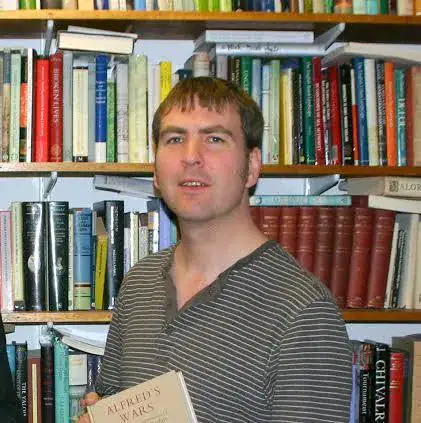
Ryan Lavelle is a professor of early medieval history at the University of Winchester and a Fellow of the Royal Historical Society. His research specialises in Anglo-Saxon England, medieval kingship, warfare and territorial organisation.
His notable publications include Alfred’s Wars, Cnut: The North Sea King and Places of Contested Power. Beyond academia, Lavelle has served as a historical adviser for the television series The Last Kingdom and contributed to the development of Winchester’s immersive Anglo-Saxon visitor attraction, 878 AD.
Source: University of Winchester – Official Academic Profile.
Copyright, Licensing and Disclosure
© HistoryMedieval. All rights reserved. This article may not be reproduced, republished, adapted, commercially exploited or used for AI training or content generation without prior written permission. Brief quotations are permitted with proper attribution and a link to the original article.
Third-party images and materials may be subject to separate copyright terms. This article may contain affiliate links or clearly identified sponsored content.
If you believe that any text, artwork, photograph, video or other material published in this article infringes your copyright, please contact info@historymedieval.com, identifying the material concerned and the relevant article URL. We will investigate the matter and, where appropriate, take prompt corrective action.