Erice: The Little Sicilian Switzerland
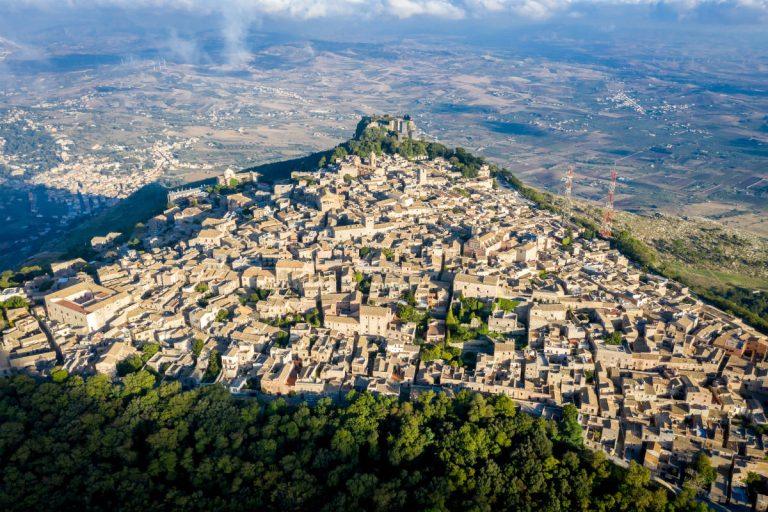
ERICE
A Scenic Journey to Erice

Erice Map
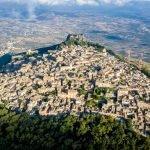
Erice is reached via a steep and winding road that leads to a breathtaking view, as the city is perched atop Mount San Giuliano at 750 meters, overlooking Trapani and the Egadi Islands. On clear days, Africa seems close. This enchanting village is truly worth a visit (but be sure to wear very comfortable shoes).
The Medieval Jewel of Erice
It is a true medieval jewel with a triangular shape, enclosed by three gates: Porta Spada, Porta Trapani, and Porta del Carmine, all surrounded by mighty walls. Stone is the defining feature of this citadel: the numerous churches, Arab-Norman houses with loggias, courtyards, and patios adorned with plants and flowers are all made of stone. The squares of Erice are narrow, and the labyrinth of streets and alleys is paved, winding continuously up and down. The “vanelle,” small corridors where only one person can pass at a time, were built by the Arabs for defensive purposes and are also made of stone.
Ettore Majorana Scientific Institute
In 1963, the Ettore Majorana Scientific Institute was founded in the ancient monastery of San Pietro, attracting scholars, conference attendees, and visitors from all over the world.
Historical and Mythological Significance
It is said that the king of Erice in ancient times had a temple built on the city’s Olympus, dedicated to the cult of the mother goddess of love, beauty, and fertility. Thus, Erice became a sacred city and the most important religious center in Sicily and the Mediterranean. Mythology aside, Erice was a Carthaginian colony until 260 BC, and when it became Roman around 241 BC, it was stripped of all its riches. The Arabs later called it Gebel-Hamed. Norman Roger II conquered it in the 13th century, and the city then experienced a renaissance. In short, Erice has always been a city whose antiquity fascinated even the Roman emperors. Today, Erice is characterized by the presence of many churches.
Must-See Sites in Erice
Some must-see sites include the Tower of King Federico, the Royal Cathedral, the Church of Sant’Isidoro and Blessed Louis, the Church of Sant’Alberto, the Monastery of SS. Salvatore, the Church of San Martino, the Church of San Pietro, the Church of San Carlo, the Church of San Giuliano, the Church of San Francesco d’Assisi, the Castle of Venus, the Torretta Pepoli, the Church of San Giovanni Battista, the Church of San Cataldo, the Church of the Madonna of Custonaci, the Casa Santa San Francesco di Sales, the Spanish Quarter, the Cyclopean Walls, the Church of Sant’Antonio, the Church of Sant’Orsola and del Carmine, the Palazzo Militari, the Church of Santa Caterina, and the Churches of Saint Francis of Paola and Saint Teresa.
GET A COPY FROM AMAZON

 Erice
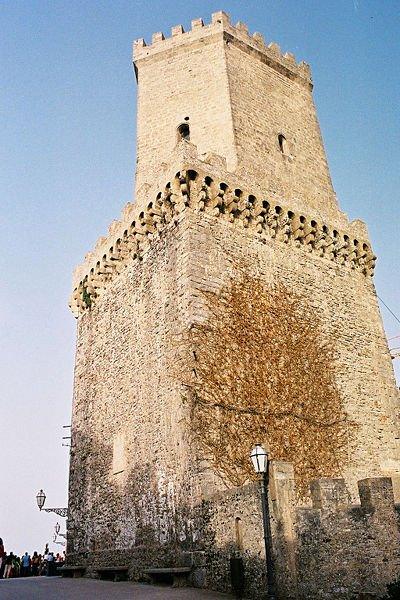 Castello del Balio, Erice
 Erice Cathedral with its bell tower
 Monte Cofano seen from an alley in Erice
 St Julian’s Church
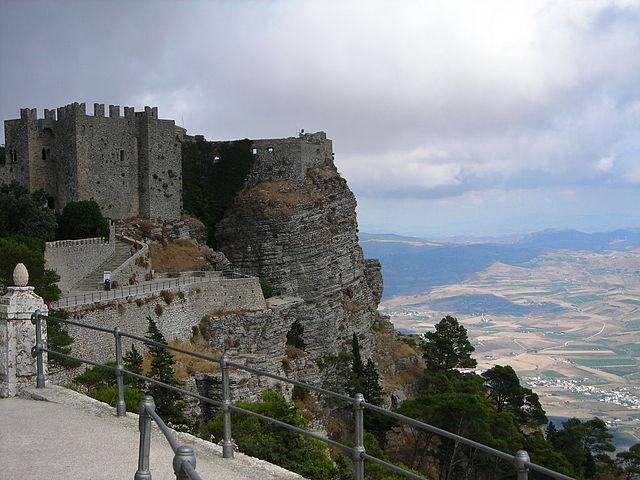 The stronghold and Castle of Venere
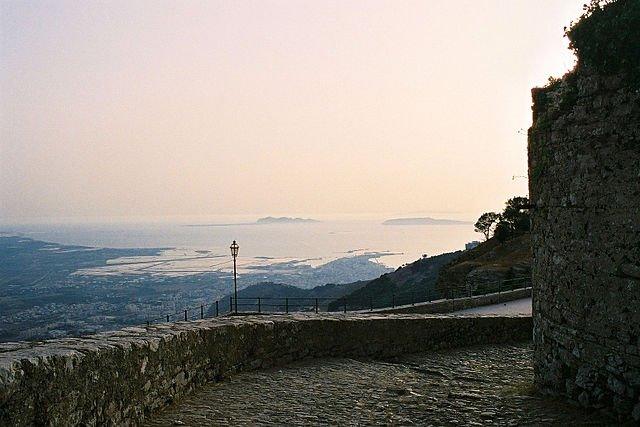 Trapani seen from the castle
 View of monte Cofano
RELATED POSTS
-
11 Aug 2024
Erice: The Little Sicilian Switzerland
-

09 Dec 2023
Antioch's Fate in the First Crusade
-

01 May 2023
Medieval Durham: The Epicenter of Power and Faith
-

21 Mar 2023
Medieval Warwick – A Fascinating Story
-

09 Mar 2023
York's Glorious Medieval Past & Its Secrets
LICENSE & COPYRIGHT
The copyright holder has published this content under the following license: Creative Commons Attribution-NonCommercial-ShareAlike. This license lets others remix, tweak, and build upon this content non-commercially, as long as they credit the author and license their new creations under the identical terms. When republishing on the web a hyperlink back to the original content source URL must be included. Please note that content linked from this page may have different licensing terms.
If I have mistakenly misused any of your content, artwork, images, or videos, please contact me on historymedieval62@gmail.com and I will take the necessary corrective action.
This website uses affiliate links. If you purchase via these links, we might earn a commission that contributes to sustaining the HistoryMedieval.com platform.