Gambling Through History: From Dice to Casinos
Advertisement Feature—Paid partnership. HistoryMedieval received payment to publish this article. Some links are part of that paid arrangement.
The History of Gambling
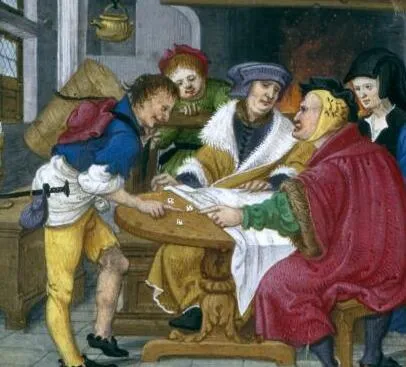
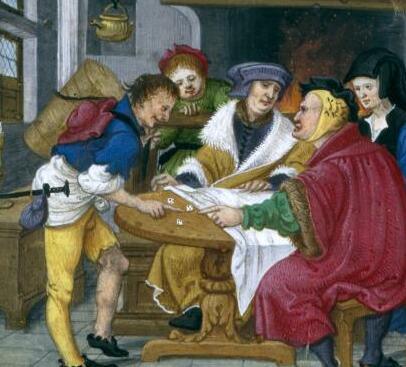
Master Jean de Mauléon – Playing Dice
Walters Art Museum, Public domain, via Wikimedia Commons
Gambling has accompanied humanity for many millennia, gradually changing along with the development of society, culture, and technology. What once began with simple games of dice and other games of chance has evolved into a diverse industry with casinos, slot machines, and digital platforms. At various points in history, gambling has acquired new forms, become a part of social life, and attracted the interest of both ordinary people and members of the nobility. To understand how the modern gambling industry emerged, it is worth tracing the main stages of its development.
The origins of gambling in the ancient world
Evidence of early games of chance survives from ancient civilisations, where such activities were associated not only with leisure but also with religious rituals, divination, and everyday life. In Mesopotamia, archaeologists have discovered gaming equipment dating back to the 3rd millennium BCE, and gaming boards have been found in the royal tombs of the city of Ur, including examples of the famous “Royal Game of Ur”, dating to around 2600 BCE. In ancient Egypt, board games such as senet, known since the Predynastic Period, became widespread, as did throwing sticks and knucklebones used to determine random outcomes. By the New Kingdom, senet had become associated with ideas about the afterlife and the soul’s journey after death.
Over time, games based on chance became more competitive and increasingly associated with wagering, and participants began betting on the results of dice rolls and the outcomes of games. In ancient Greece, knucklebones, usually made from the ankle bones of sheep or goats and having four usable faces, were commonly used in games of chance. In the Roman Empire, gambling with dice became widespread, especially during holidays and public celebrations, although wagering was subject to legal restrictions outside certain permitted occasions, such as the festival of Saturnalia. Interest in such entertainment was so great that both ordinary citizens and the wealthy participated in these activities.
Middle Ages
During the Middle Ages, gambling remained popular among ordinary artisans, members of the nobility, and the clergy. Dice games remained among the most common forms of gambling, while board games continued to be played and card games, which reached Europe from the East during the late fourteenth century, attracted increasing attention. Games took place in taverns, at fairs, in private homes, and at courts, with participants often wagering money, valuables, and even personal property. Gambling provoked mixed reactions from the Church and authorities, so several European cities imposed restrictions on games and monetary wagers.
During the Middle Ages, popular games of chance and strategy, some of which involved wagering, included:
-
Dice games;
-
Tabula (a predecessor of modern backgammon);
-
Chess;
-
Early card games;
-
Alquerque (a precursor of modern draughts).
Unlike today, when players can readily access detailed game instructions and explore online promotions such as cashable no-deposit offers, medieval participants generally learned games through personal instruction and local traditions. Many rules were passed down orally from one player to another, and the games themselves could vary depending on region and local traditions, although written descriptions of certain games also existed in medieval manuscripts. The spread of printing later made gaming instructions more widely accessible and encouraged greater consistency in some rules, while expanding trade and cultural exchange continued to introduce new forms of play.
The development of gambling entertainment in the Renaissance and early modern period
During the Renaissance, gambling gained new impetus thanks to the spread of card games, the development of printing, and the expansion of trade relations between European countries. Italy played a particularly important role in this process, where various forms of monetary betting, table games, and organised lotteries developed during the 15th and 16th centuries. The advent of printing allowed for the dissemination of game rules and instructions, making it much easier to learn new games, and the games themselves gradually acquired more uniform rules. From the 16th century onwards, parts of Europe increasingly used lotteries to raise public funds and support civic projects.
In the 17th and 18th centuries, gambling became a prominent part of European social life, particularly among the aristocracy and wealthy citizens, and dedicated gambling establishments gradually evolved into organised leisure venues. One famous example was the Venetian Ridotto, which opened in 1638 and was designed to host games under controlled conditions; such establishments contributed to the development of a culture of organised gambling. During this period, roulette began to take on a recognisable form in 18th-century France, and interest in mathematics and probability theory gradually influenced the understanding of the principles of randomness and game odds.
The emergence of the first casinos and the formation of the gambling industry
An important milestone in the history of gambling was the opening of the Ridotto in Venice in 1638, which is widely regarded as one of Europe’s earliest publicly authorised gambling houses. It was located in the Palazzo Dandolo and offered visitors organised card games and other forms of entertainment for money. The establishment operated during the carnival season and attracted people from various social classes, including the aristocracy and wealthy travellers. Venetian archival records listed 118 establishments known as ‘casini’ in 1744, although these private leisure spaces served various social functions and were not exclusively gambling clubs, according to research from the University of Venice.
In the 18th and 19th centuries, such establishments began to spread across Europe, gradually evolving into commercial entertainment centres with established rules and gaming halls. One of the most famous examples was the Monte Carlo Casino, which opened in 1863, the same year that the Société des Bains de Mer was established under Prince Charles III of Monaco. In 1866, the developing district officially adopted the name Monte Carlo, which made it an attractive destination for wealthy tourists and gambling enthusiasts. Gradually, casinos evolved into a full-fledged industry that combined gambling, the hotel business, tourism, and the service sector.
Gambling in the 19th and 20th centuries
In the 19th century, the Industrial Revolution contributed to the development of gambling and the emergence of new gaming devices. In 1895, the American inventor Charles Fey created the Liberty Bell, one of the first mechanical slot machines with three spinning reels. At the same time, poker, blackjack, and roulette gained popularity and gradually became the mainstays of casino offerings. The development of transport and tourism also contributed to the spread of gambling establishments in various countries.
In the 20th century, several gambling centres expanded or consolidated their reputations, attracting visitors from around the world:
-
Las Vegas – Nevada legalised casino gambling in 1931, helping to establish Las Vegas as a major gambling destination.
-
Reno – one of the earliest established gambling centres in the state of Nevada.
-
Monte Carlo – a renowned European casino centre since the 19th century.
-
Atlantic City – casino gambling was approved by referendum in 1976, and the first legal casino opened in 1978.
-
Macau – gradually developed into a major centre of the gambling industry.
During this period, many countries began developing legislation to regulate gambling, defining the operating conditions of casinos and their taxation. Gradually, gambling became an important part of the tourism industry, and casinos evolved into large-scale entertainment complexes.
The emergence and development of online gambling
With the spread of the Internet in the 1990s, gambling began to shift to a digital format. In the mid-1990s, companies such as Microgaming began developing software for online casinos, and by 1996, platforms such as InterCasino were accepting real-money wagers online. By the late 1990s, the number of such platforms was rapidly increasing, marking the beginning of a new direction in the gambling industry.
Gradually, traditional games, including roulette, blackjack, and slot machines, became available online. In January 1998, Planet Poker began offering real-money online poker, becoming one of the pioneering platforms in this emerging market. Later, the development of smartphones allowed for the use of gaming platforms on mobile devices, and video streaming technologies led to the emergence of live-dealer games.
Copyright, Licensing and Disclosure
© HistoryMedieval. All rights reserved.
This article may not be copied, republished, adapted, translated, distributed, scraped or otherwise reused without prior written permission, except where permitted by law. Unauthorised use for AI training, dataset creation, text and data mining or generative-AI systems is prohibited.
Third-party images and materials may be subject to separate copyright or licensing terms. For copyright concerns, contact info@historymedieval.com. We will review the matter and take any necessary corrective action.
This article may contain affiliate links. We may earn a commission from qualifying purchases at no additional cost to the buyer.