
The End of Roman Britain: What Happened After Rome Withdrew?
- 3 November 2026
- 0 Comment
- 32 Min Read


Roman Britain – Romanisation and Approx. Limits of Civil Boundaries. Based on Jones & Mattingly’s Atlas of Roman Britain
In the opening years of the fifth century, Britain remained a land shaped by Rome. Roads still connected its towns and military forts, the countryside was filled with farms and estates, and generations of inhabitants had grown accustomed to institutions introduced by the empire. Many were Roman citizens; some spoke and wrote Latin, and the wealthier members of society continued to enjoy lifestyles recognisably Roman. Yet the political and economic foundations supporting this world were becoming increasingly fragile.
For much of the previous century, Roman Britain had been affected by imperial civil wars, changes in military organisation and growing difficulties in maintaining the systems of taxation and commerce upon which provincial life depended. The empire faced threats across several frontiers, while emperors and rival generals competed for troops and resources. Britain, situated on the north-western edge of the Roman world, gradually became a lower priority for governments struggling to maintain control elsewhere.
The traditional account places the end of Roman Britain in AD 410, when Emperor Honorius supposedly instructed its inhabitants to defend themselves. The reality was considerably more complicated. Roman authority did not disappear overnight, nor did its withdrawal bring an immediate end to civilisation. Instead, a long process of political separation and economic transformation left the inhabitants of Britain adapting to circumstances that would ultimately reshape the island.
Understanding what happened during these decades is essential for understanding the emergence of Anglo-Saxon England. Before the new kingdoms could develop, the institutions that had governed much of Britain for centuries had first to weaken, fragment and give way to different forms of authority.

Roman infrastructure in 4th-century Britain
From Conquest to Roman Rule
Britain’s relationship with Rome began long before it became an imperial province. Julius Caesar led military expeditions across the Channel in 55 and 54 BC, establishing contact with several British rulers and demonstrating Rome’s interest in the island. Neither expedition resulted in permanent conquest, although Roman commercial and diplomatic influence subsequently increased among the communities of southern Britain.
The decisive invasion came in AD 43, during the reign of Emperor Claudius. Roman forces gradually established control over much of southern Britain, while Claudius himself travelled to the island to participate in the conquest’s final political and ceremonial stages. Ancient accounts associate his expedition with the use of elephants, an extraordinary display intended to demonstrate imperial power. The submission of some British rulers did not end resistance, however, and Rome spent decades extending and consolidating its authority.
One of the most serious challenges came in AD 60 or 61, when Boudica, queen of the Iceni, led a revolt that devastated several Roman settlements, including Camulodunum, Londinium and Verulamium. Although the uprising was eventually defeated, it demonstrated that conquest did not necessarily produce immediate acceptance of Roman rule. Roman expansion continued during the following decades, particularly under governors such as Agricola, while the northern frontier remained a contested region.
The construction of Hadrian’s Wall, beginning in AD 122, reflected Rome’s decision to establish a more permanent frontier across northern Britain. Major legionary fortresses at York, Chester and Caerleon formed part of the wider military infrastructure, while smaller forts and auxiliary garrisons protected roads, frontier zones and strategically important locations.
Over time, military occupation developed into a sophisticated system of provincial government. Britain was divided into administrative territories known as civitates, many associated with earlier tribal communities. Their principal towns became centres of local government, where councils, magistrates and officials administered taxation, public works and other responsibilities under the authority of Roman provincial governors.
These institutions would become especially significant during the empire’s final decades. As historian Tony Sullivan explains in The Early Anglo-Saxon Kings, the civitas formed an important territorial and political unit, raising questions about whether some of its structures or geographical identities survived into the fifth century.
Towns, Roads and the Benefits of Roman Civilisation
The Roman government transformed the physical landscape of much of Britain. Towns developed around administrative centres, military installations and commercial routes, while roads connected coastal ports with inland settlements and the northern frontier. Originally constructed largely to move soldiers, supplies and official communications, this network also supported commerce, allowing agricultural produce, manufactured goods and imported commodities to be moved between communities.

Reconstruction drawing of Londinium, c. 120 AD
Londinium became one of the province’s principal centres for trade and administration. Its riverside warehouses, public buildings, temples and commercial establishments reflected the city’s importance within the imperial economy. Other settlements, including Corinium at Cirencester, Eboracum at York and Verulamium near modern St Albans, developed substantial urban infrastructures. The larger towns possessed public baths, markets, drainage systems and buildings associated with civic government.
Roman Britain also supported considerable industrial activity. Pottery workshops produced vessels for domestic and commercial use, while ironworkers, leatherworkers, textile producers and other craftspeople supplied civilian and military markets. Coinage circulated widely, particularly in areas closely connected to towns and the army, although monetary exchange was never equally important in every community.
Literacy played an important role in administration, military record-keeping, commercial transactions and elite education. Latin became the principal written language of government, law and educated society, existing alongside the Brittonic languages spoken by much of the population. Its influence extended beyond settlers from the continent, as members of the native aristocracy increasingly adopted Roman customs and participated in provincial administration.
Roman identity was also a matter of law. In AD 212 or early 213, Emperor Caracalla extended citizenship to almost all free inhabitants of the empire, bringing the provincial population into a wider legal community. This did not eliminate differences of wealth, status or power, and enslaved people remained excluded. Nevertheless, by the fourth century, the distinction between Romans and Britons was considerably more complicated than the idea of foreign occupiers ruling an entirely separate population might suggest.
A Prosperous Province, but Not for Everyone
The archaeological remains of Roman villas provide some of the most impressive evidence of provincial prosperity. Wealthy landowners could inhabit substantial houses decorated with mosaics and wall paintings, heated by hypocaust systems and surrounded by productive agricultural estates. Some villas in southern and western Britain reached particularly elaborate forms during the fourth century, even while aspects of urban public life were beginning to decline.

Reconstruction illustration of a Roman villa – © historymedieval.com
Yet these buildings represent the circumstances of a relatively privileged minority. Most inhabitants lived in rural communities, working the land, raising animals or undertaking labour that offered little resemblance to the comfortable existence enjoyed by wealthy estate owners. For many, the demands of taxation, agricultural production, and physical work persisted, regardless of changes in the imperial government.
Excavations at Poundbury Camp, near Dorchester in Dorset, provide a more personal perspective. Archaeologists recovered more than 1,400 burials, representing approximately 1,200 skeletons, from cemeteries used in the 3rd-4th (possibly 5th) centuries of Roman Britain. Osteological research has contributed to our understanding of mortality, family life and health, including the substantial risks faced by infants and children.
The Poundbury evidence should not be treated as representative of every Romano-British community. Nevertheless, it reminds us that the achievements of Roman civilisation existed alongside the hardships of ordinary life and that the province’s prosperity was distributed unequally.
This distinction matters when considering what followed Rome’s withdrawal. For those dependent upon imperial office, public contracts and long-distance trade, the loss of Roman government could be devastating. For many rural families, whose daily existence already centred upon agricultural production and local relationships, the transformation may initially have been less dramatic.


Peutinger Map showing Kent in late antiquity. The map is a 13th-century copy of a late Roman road map, and only a fragment of south-east Britain survives.
When Britain’s Defences Came Under Attack
Roman Britain had faced external threats long before the fifth century. The northern frontier required continued military expenditure, while communities along the western coasts experienced contact and occasional conflict with peoples from Ireland. During the later Roman period, seaborne raiding also became increasingly important along the eastern and southern coasts.
These pressures intensified during the third century, when civil wars, contested successions and invasions repeatedly shook the empire across its European frontiers. Although Britain escaped some of the worst destruction experienced elsewhere, the wider struggle for imperial resources affected its economy and military establishment.
The most serious recorded crisis of the fourth century occurred in AD 367, during the episode conventionally known as the Great Conspiracy. The historian Ammianus Marcellinus describes severe disruption caused by attacks involving Picts, groups identified as Scotti from Ireland and other enemies of Roman authority. Saxon raiders were also active in the wider period, although the surviving evidence does not establish that all these attacks formed one centrally coordinated campaign.
Roman forces suffered significant setbacks, and the imperial government dispatched the general Theodosius the Elder to restore order. Arriving in Britain in AD 367, he reorganised military operations and, in AD 368, conducted campaigns that re-established Roman control. His intervention demonstrates that the empire could still mount effective military responses when it possessed the resources and political determination to do so.
The consequences were nevertheless troubling. Britain remained dependent upon imperial armies and commanders capable of responding to serious disturbances, while the security of the province increasingly relied upon decisions taken far beyond its borders.
The Saxon Shore Forts
One of the most visible responses to the changing military situation was the development of coastal fortifications along eastern and southern Britain. Sites such as Richborough in Kent, Portchester in Hampshire, Pevensey in Sussex and Caister-on-Sea in Norfolk formed part of a wider network of defensive and military installations constructed or adapted during the third and fourth centuries.
These strongholds are commonly described as the Saxon Shore forts, a name derived from a late Roman administrative document, the Notitia Dignitatum. Their imposing walls, strategic positions and association with coastal waterways have traditionally encouraged historians to interpret them as defences against Germanic-speaking raiders arriving by sea.
The archaeological evidence suggests a more complicated picture. According to English Heritage’s research on the Saxon Shore, the forts were constructed at different dates and may have served several purposes, including military supply, coastal surveillance, the protection of transport routes and the movement of troops. Some of these forts were established before surviving written sources clearly documented Saxon raiding.
Richborough illustrates the changing character of these installations. Once an important gateway for the conquest of Britain, it later acquired powerful stone fortifications. Archaeological discoveries, including late Roman coins and a probable Christian baptismal font, indicate that activity continued at the site into the opening years of the fifth century.
The forts therefore testify to both Roman organisational ability and the changing priorities of the later empire. They also reveal an important limitation in our evidence: the existence of impressive fortifications does not establish how many soldiers remained to defend them at any particular date.

Richborough Roman Fort, c. AD 300–400. An artistic reconstruction of the late Roman coastal fortress in Kent, based on its surviving archaeological features. – © historymedieval.com
The Empire’s Problems Become Britain’s Problems
Events on the European mainland increasingly influenced Britain’s future. During the later fourth century, the westward movement of the Huns contributed to upheaval among Gothic populations and other groups living beyond the Roman frontier. The admission and settlement of Gothic communities within imperial territory became entangled with political and military tensions, culminating in the Roman defeat at Adrianople in AD 378.
The death of Emperor Valens during that battle exposed serious weaknesses in Roman military organisation, although the Eastern Roman Empire survived and eventually recovered. Adrianople did not directly cause the end of Roman Britain, but it formed part of a larger crisis in which imperial governments repeatedly competed for soldiers, money and political authority.
Britain’s importance was increasingly measured against threats closer to the centres of imperial power. The province could still supply agricultural produce, including grain for armies operating on the continent, but its own security became vulnerable whenever troops and resources were needed elsewhere. For a frontier province dependent upon military expenditure and imperial administration, this represented a fundamental change.
Towns, Villas and the Changing Economy
The most visible evidence for the transformation of Roman Britain comes from archaeology. Across many parts of the former province, excavations reveal declining urban activity, changes in domestic architecture and a reduction in the production and circulation of manufactured goods. Yet these developments do not always have precise dates, and some were already underway before the political crisis of AD 409–411.
Roman towns had been more than concentrations of buildings. They were centres of administration, taxation, manufacture, legal authority and social prestige, supported by the wealth generated through agricultural estates and imperial expenditure. As the wider Roman system weakened, the institutions sustaining these urban centres became increasingly difficult to maintain.
Some public buildings deteriorated or were reused for different purposes. The construction and maintenance of baths, forums and monumental civic structures required resources and organisational arrangements that were no longer assured. In certain towns, settlement contracted into smaller areas, while others experienced substantial changes in their functions.
Wroxeter, the Roman city of Viroconium Cornoviorum in modern Shropshire, provides an especially revealing example. Once an important urban centre with imposing public buildings and extensive commercial connections, it underwent substantial transformation during the later Roman period. Excavations revealed that parts of its monumental civic landscape were abandoned, dismantled or adapted, while timber structures may have occupied spaces previously devoted to public architecture.
For many years, scholars interpreted evidence from Wroxeter as demonstrating a continuing urban community into the sixth or even seventh century. However, Alan Lane’s reassessment as an archaeologist, published in Antiquity in 2014, questioned the chronology of these later buildings and suggested that the city may have been largely abandoned as an urban centre during the late fourth or early fifth century.
The debate illustrates a wider difficulty. Continued activity at an old Roman site does not necessarily mean that the settlement retained its previous population, administrative role or urban character. Equally, the abandonment of monumental buildings does not mean the surrounding countryside became uninhabited.
The countryside presents a similarly varied picture. Some wealthy villas declined or ceased to function as elite residences, while others were altered or reused. Their disappearance from the archaeological record may reflect changes in estate ownership, household organisation and social identity rather than the wholesale abandonment of agricultural land.

The ruins of Viroconium’s public baths at Wroxeter
When Coins and Mass-Produced Pottery Became Scarce
The contraction of coin circulation is among the most striking features of late Roman Britain’s archaeological record. Imperial money had supported military pay, taxation and commercial exchange, particularly around towns and garrisons. When the regular supply of new coins ceased, the consequences extended far beyond the soldiers who depended upon imperial salaries.
Archaeologists observe that newly arriving Roman coinage became exceptionally scarce during the early fifth century. Existing coins could continue to circulate, and some silver coins were clipped or reused, but the monetary system that had sustained large parts of the provincial economy was increasingly difficult to maintain.
Manufacturing also changed. Large pottery industries that had supplied extensive regional markets contracted, while the movement of goods across established distribution networks declined. Similar developments affected some branches of iron production and other crafts closely associated with military supply and the urban economy.
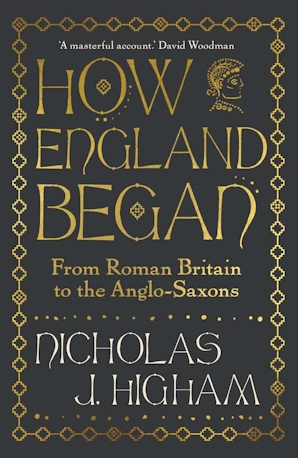
It would nevertheless be inaccurate to suggest that pottery, metalworking or commercial exchange suddenly disappeared in AD 410. Higham notes that wheel-thrown pottery continued to be produced into the 420s and possibly later, while archaeological research increasingly suggests that different industries declined at different times.
The distinction is important. The end of imperial-scale manufacture did not mean the end of production, just as the collapse of regular coin supply did not mean that goods ceased changing hands. Rather, different, frequently more localised arrangements replaced the forms of economic organisation that had characterised Roman Britain.
The disappearance of familiar Roman goods also creates a problem for archaeologists. Coins and distinctive ceramics are particularly useful for dating and identifying settlements. Communities that relied increasingly upon perishable materials, reused objects or locally produced goods can therefore become less visible in the archaeological record without necessarily disappearing from the landscape.
A Different Kind of Daily Life
For ordinary inhabitants, the consequences of these changes depended greatly on where they lived and how they organised their livelihoods. A merchant whose business depended upon supplying a military garrison might have experienced severe economic losses. A municipal official could discover that the institutions supporting his authority were becoming irrelevant, while a wealthy landowner might be forced to maintain security and political influence without dependable imperial assistance.
For a rural family, however, the changes may have been less immediate. Fields still required cultivation, animals still needed tending, and communities remained dependent upon established agricultural knowledge. Roman roads and bridges did not cease to exist simply because the imperial government stopped maintaining them, although their condition and usefulness could deteriorate over time.
Environmental and archaeological evidence suggests substantial continuity in the management of Britain’s agricultural landscape. Higham argues that farming remained resilient, even as some land shifted from arable cultivation towards pasture. The reduction of imperial taxation and grain demands could have relieved pressures upon certain communities, although insecurity and the weakening of wider exchange networks created different difficulties.
These possibilities complicate the familiar image of a country descending immediately into famine, violence and universal poverty. Some people undoubtedly suffered from warfare, displacement and economic disruption, but the evidence does not establish a single catastrophe experienced equally across Britain.
The ending of Roman government was therefore also a change in the organisation of everyday life. Communities increasingly depended upon local relationships, resources and authority, while the institutions that had previously connected them to a vast Mediterranean empire gradually lost their influence.

Birdoswald Roman Fort
Birdoswald and the Survival of Roman Communities
If Wroxeter illustrates the problems involved in interpreting urban decline, Birdoswald Roman Fort on Hadrian’s Wall provides particularly compelling evidence for continuity.
Known to the Romans as Banna, Birdoswald had formed part of the northern frontier’s military establishment. Its substantial defences, barracks and granaries reflected the organisational demands of a professional army supported by the wider imperial system. Conventional accounts once assumed that such military communities disappeared when the Roman government withdrew its remaining support.
Excavations at Birdoswald have challenged that assumption. Archaeologists discovered that occupation continued beyond the end of imperial rule, and they adapted structures associated with the former Roman fort for different purposes. Particularly significant were timber halls constructed on or around the sites of earlier granaries, suggesting that buildings once used for military supply had acquired new functions.
As English Heritage explains in its history of the site:
It is clear that this occupation continued without a break from the late Roman period.
— English Heritage, History of Birdoswald Roman Fort.
These discoveries raise intriguing questions about the people who occupied the fort after the collapse of Roman administration. The former garrison may have developed into a locally organised military community, perhaps under the authority of a leader who could command armed followers and maintain control over the surrounding countryside.
The evidence does not allow us to identify such a leader or reconstruct the community’s political institutions with certainty. Nevertheless, Birdoswald demonstrates that the disappearance of an imperial command structure need not have resulted in the abandonment of the soldiers’ homes and settlements.
There is something particularly revealing about this development. Within walls originally built to protect Roman imperial territory, a community appears to have continued living while adapting its buildings and social organisation to circumstances that Rome could no longer control.
From Imperial Officials to Local Leaders
Across Britain, the weakening of central government created opportunities and difficulties for local elites. Wealthy landowners, established families, religious leaders and military commanders may have assumed responsibilities previously exercised by provincial officials. The process was often tumultuous and varied, and the surviving evidence usually does not allow individual political developments to be reconstructed in detail.
Some older territorial arrangements may have survived in altered forms, particularly where the administrative geography of the civitates remained useful. Yet it would be too simple to assume that every Roman administrative district evolved directly into a post-Roman kingdom. Political authority was being renegotiated through local alliances, competition for resources, military power and the continuing prestige of established institutions.
Christianity provided another important connection with the Roman past. The religion had gained ground during the fourth century, and Christian communities survived the disappearance of imperial government. The presence of British bishops at ecclesiastical gatherings and the later activities of figures such as Germanus of Auxerre demonstrate that religious connections with continental Europe continued.
Western Britain also retained significant commercial and cultural relationships beyond the island. At Tintagel in Cornwall, archaeological discoveries include Mediterranean pottery and imported glass dating to the fifth and sixth centuries. These finds point to continuing maritime connections and the emergence of wealthy political centres capable of obtaining prestigious foreign goods.
Such evidence demonstrates that Britain’s separation from imperial government did not produce complete isolation. Different regions developed along different political and economic paths, with some maintaining more recognisably Roman traditions while others experienced the growing influence of Germanic-speaking populations.
The earliest stages of that transformation remain difficult to reconstruct. Raiding, military recruitment, migration and settlement had already brought people from continental Europe into contact with Britain before the end of imperial rule. During the fifth century, those relationships would increasingly contribute to the development of new communities and political identities.
For the Romano-British inhabitants, however, the end of imperial government did not immediately mean the end of their history. They remained participants in shaping the societies that emerged, whether through the preservation of local traditions, adaptation to new forms of authority or relationships with incoming populations.


Luciano Anastasi
Luciano is the founder of the MedievalHistory platform and the LinkedIn History Enthusiasts Group, where he is dedicated to curating and sharing high-quality medieval history content. His goal is to engage scholars, teachers, students, and enthusiasts by fostering insightful discussions and promoting scholarly resources on topics from medieval warfare and religion to societal transformations and daily life in the Middle Ages.
Luciano is also an active book reviewer, focusing on academic publications related to medieval history. He recently collaborated with Yale University Press to review forthcoming medieval history titles, aiming to deepen educators' and researchers' understanding of the period. Alongside his history endeavors, he has over 40 years of experience in IT leadership roles across various industries, including the public sector, banking, insurance, airlines and consulting, and has contributed to United Nations projects.
With a Master of Arts in Business Process Management, Luciano combines his expertise in IT strategy and governance with his passion for medieval history. He leverages technology to bridge the academic community and the wider public, making historical scholarship more accessible through engaging online content.