The Norman Conquest: From Southern Italy to Malta
- 22 October 2026
- 0 Comment
- 18 Min Read

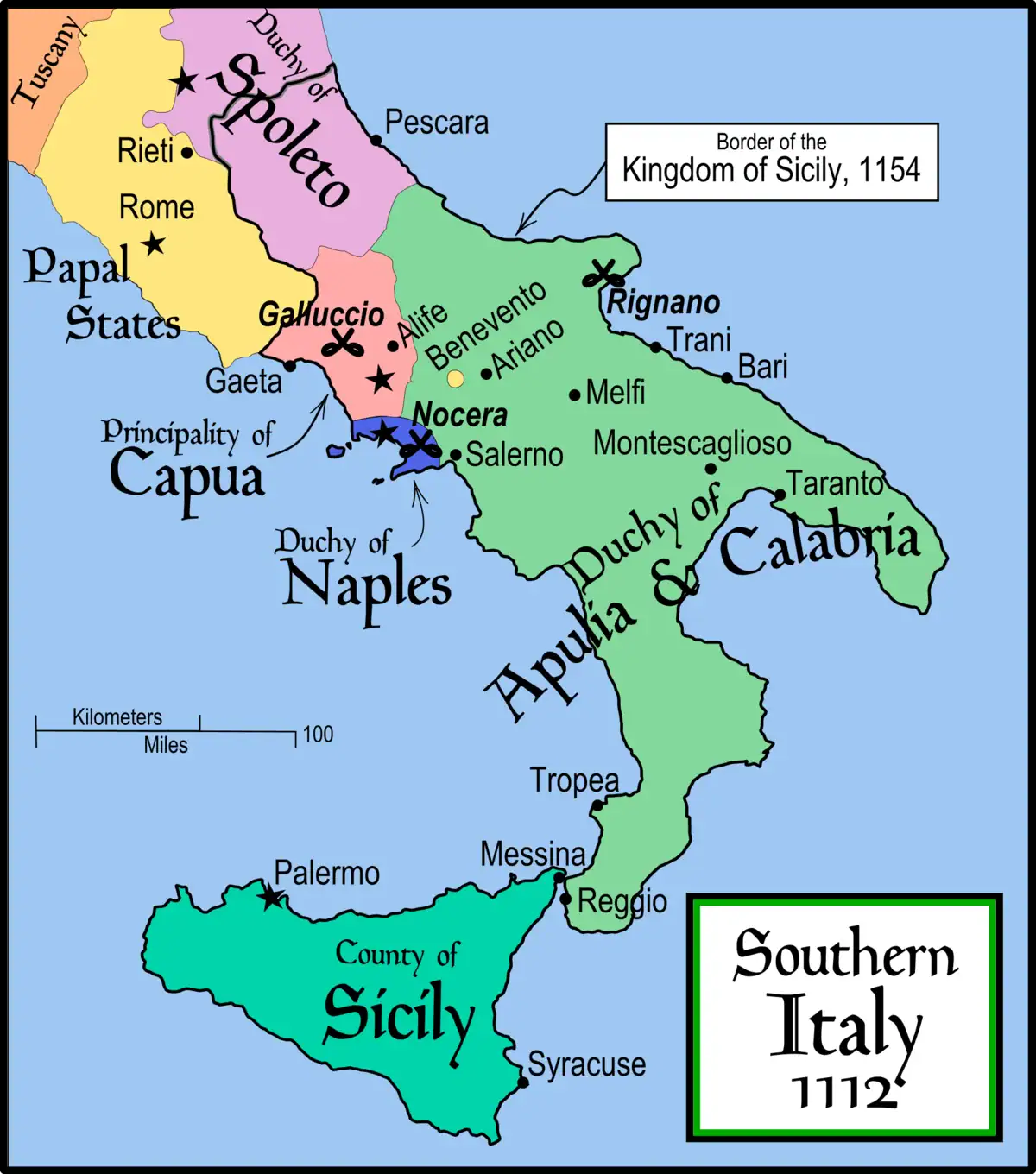
This is a political map of southern Italy in 1112 AD, the date when Roger II of Sicily reached his age of majority, also showing the border of the Kingdom of Sicily in 1154, on his death.
In the early eleventh century, bands of Norman warriors began arriving in southern Italy, far from their homeland in northern France. Some came as pilgrims, others as mercenaries, seeking employment with local rulers whose rivalries offered opportunities for military service and personal advancement. Few could have anticipated the scale of the transformation that followed. Within a century, their descendants controlled much of southern Italy, had conquered Sicily, and had extended their influence across the central Mediterranean to Malta.
Their achievement was remarkable, although it was neither inevitable nor the result of a carefully coordinated plan. The Norman conquest developed through a complicated mixture of military ambition, shifting alliances, political fragmentation and religious legitimacy. Men who initially fought for established rulers gradually replaced them, eventually creating a kingdom that challenged the authority of both the Byzantine and Western empires.
The Norman expansion also brought together societies with very different political, religious and cultural traditions. We cannot understand its consequences through military history alone. The story is equally about the persistence of Greek and Arabic institutions, the changing position of Muslim communities, and the emergence of a Mediterranean monarchy whose character owed much to the peoples it conquered.

A typical armed Norman soldier of the latter years of the 11th century
A Region Divided by Competing Powers
Southern Italy at the beginning of the eleventh century was a politically fragmented region. Byzantine emperors still exercised authority over much of Apulia and Calabria, while Lombard princes ruled territories centred on Benevento, Capua and Salerno. Coastal cities such as Naples and Amalfi maintained varying degrees of independence, navigating between competing rulers and commercial interests.
The papacy had its ambitions, while the German emperors occasionally intervened south of Rome. Across the Strait of Messina, Sicily had been under Muslim rule since the ninth century, although political divisions increasingly weakened its governing authorities.
These rivalries helped create the conditions for Norman expansion. No single power could consistently control the region, and local rulers frequently employed foreign soldiers to strengthen their positions.
The Arrival of Norman Mercenaries
The earliest Norman presence in southern Italy remains difficult to reconstruct. Medieval chroniclers preserved accounts of Norman pilgrims becoming involved in local warfare, but the details differ and cannot always be independently verified.
What is clearer is that Norman soldiers had established themselves in the region by the early eleventh century. Their military usefulness, particularly as mounted warriors, made them attractive to rival princes and Byzantine commanders.
A decisive development came in 1030, when Rainulf Drengot received Aversa, near Naples, establishing one of the first enduring Norman lordships in Italy. What began as military employment was becoming a territorial power.
As Graham A. Loud (2000) demonstrates in his study of Norman expansion, the conquest was a gradual process shaped by local circumstances, rather than a single, organised invasion.

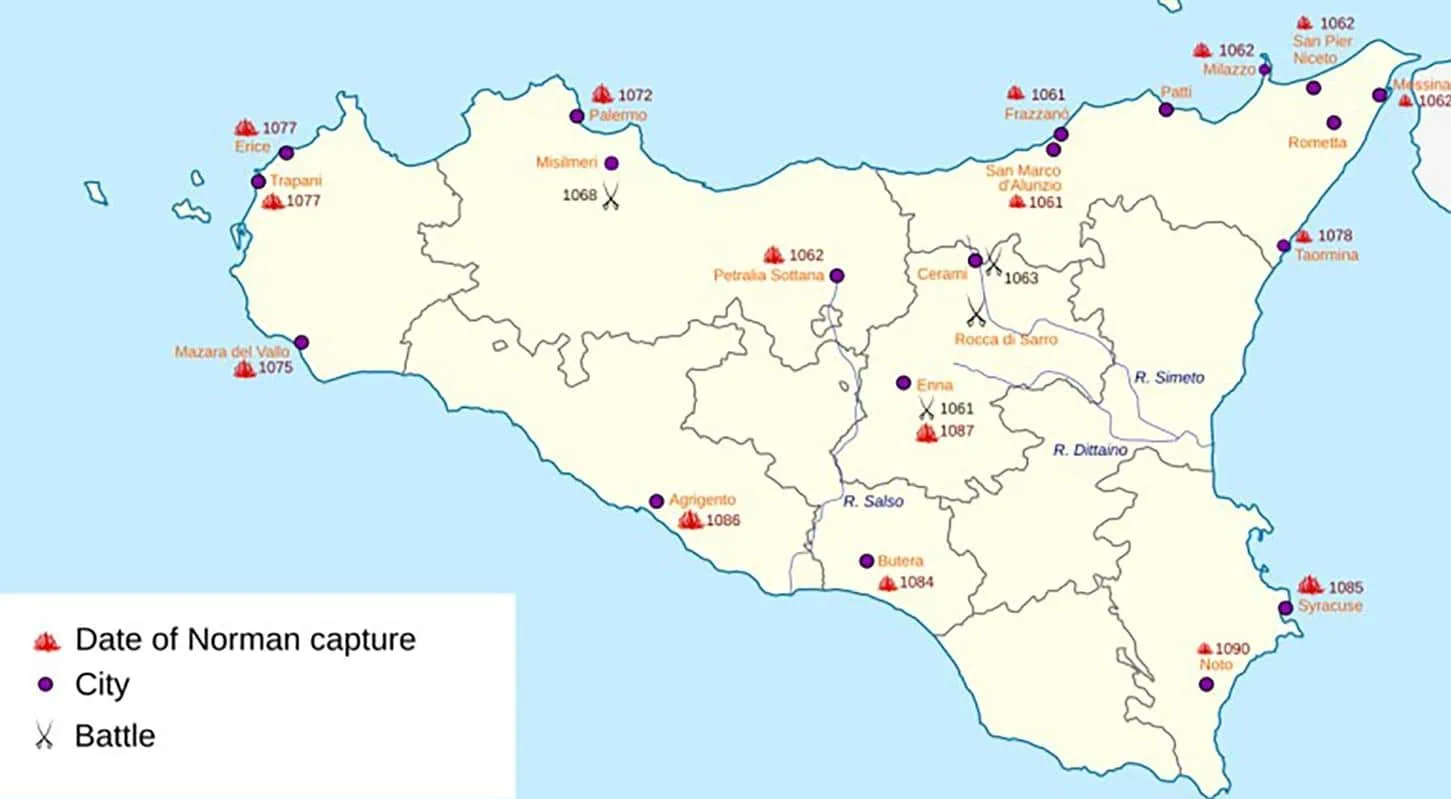
Map of Sicily denoting how it was conquered by the Normans in the years leading to 1090
Sicily Under Muslim Rule
Across the Strait of Messina lay Sicily, an island whose strategic location and agricultural wealth made it an attractive objective.
Muslim forces had first invaded Byzantine Sicily in 827, and the conquest of the island unfolded over many decades. By the eleventh century, Sicily possessed established Islamic political institutions, important commercial centres and a population that included Muslims, Greek-speaking Christians and other communities.
Palermo had developed into a significant Mediterranean city, connected through commerce and culture to North Africa and the wider Islamic world.
However, the political unity of Muslim Sicily had weakened. Rival authorities and local conflicts created opportunities for external intervention, much as political fragmentation had done in southern Italy.
Roger I and the Invasion of 1061
In 1061, Robert Guiscard and his brother Roger crossed the Strait of Messina, beginning the Norman invasion of Sicily. Their capture of Messina established an initial foothold, but the remainder of the conquest proved considerably more difficult.
Roger gradually assumed the leading role in the campaign. His forces relied on mobile warfare, sieges, alliances and the careful consolidation of territory, often operating against opponents with access to substantial resources.
The Normans won a decisive victory at Cerami in 1063, although medieval accounts of the battle contain exaggerated numbers and providential explanations. Such narratives partly aimed to present Norman success as evidence of divine favour.
The conquest was therefore not simply a contest between two unified religious communities. Local Muslim rivalries, political negotiations and the varied interests of Sicily’s inhabitants influenced the course of the war.
The Fall of Palermo and Final Resistance
The capture of Palermo in 1072 represented a major turning point. Sicily’s principal urban centre passed into Norman hands, giving the conquerors access to an important administrative and commercial base.
Nevertheless, large parts of the island remained beyond their control. Roger continued campaigning over the following years, capturing Syracuse in 1086 and finally bringing the remaining independent Muslim strongholds, including Noto, under Norman authority in 1091.
The conquest had taken approximately thirty years.
Its consequences were substantial, but Norman victory did not result in the immediate disappearance of Sicily’s Muslim population or its established institutions. Muslim communities continued to live and work under Christian rulers, while Arabic and Greek remained important languages within the island.
This continuity reflected both political calculation and practical necessity. The Normans were a relatively small ruling minority, and governing their newly acquired territories required the cooperation of existing communities and administrators.
Geoffrey Malaterra’s Deeds of Count Roger, written from a perspective broadly sympathetic to the conquerors, remains one of the principal narrative sources for these events. Its accounts are invaluable, although their celebration of Norman military success requires careful interpretation (Malaterra, trans. Wolf, 2005).

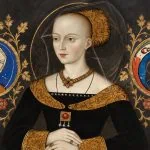
An anonymous imaginary portrait of Count Roger
Count Roger’s Expedition
With Sicily’s conquest nearing completion, Roger I turned his attention to Malta, whose position south of Sicily gave it considerable strategic importance.
In 1091, Roger led an expedition against the islands, which had been under Muslim rule since the ninth century. The principal surviving narrative comes from Geoffrey Malaterra, whose account describes Roger’s landing, the resistance he encountered and the eventual submission of Malta’s Muslim authorities.
According to this account, the island’s rulers agreed to provide tribute and hostages. Malaterra also describes the liberation of Christian captives, an episode that later became an important element in popular accounts of the Norman arrival.
Yet the historical significance of the expedition is more complicated than the traditional story of a straightforward Christian reconquest suggests.
Conquest, Tribute or Political Submission?
In Maltese historical memory, 1091 has frequently been presented as the moment when Roger liberated Malta from Muslim rule and restored Christianity. However, the surviving evidence does not support such a comprehensive transformation.
Godfrey Wettinger (1995), in his study The ‘Norman’ Heritage of Malta, examined the traditions surrounding Roger’s expedition and the difficulties of separating later national narratives from contemporary evidence.
The available sources suggest that Roger secured Malta’s submission, probably establishing a tributary relationship rather than introducing an entirely new system of direct government.
Muslim political and social structures appear to have continued after the expedition, while the island’s Arabic-speaking culture remained deeply rooted.
This distinction matters because military submission did not necessarily entail immediate occupation, religious conversion or the displacement of established institutions.
Roger II and the Consolidation of Norman Authority
The relationship between Malta and its Norman rulers entered another phase during the reign of Roger II, son of Roger I. A second Norman intervention, generally dated to 1127, is mentioned by the twelfth-century chronicler Alexander of Telese, who records Roger’s campaigns against Mediterranean islands, including Malta.
The precise circumstances and consequences of this expedition remain open to interpretation. Some historians regard it as marking the establishment of firmer Norman authority over Malta, in contrast to the tributary submission associated with Roger I’s campaign of 1091. However, the surviving evidence is limited, and the extent to which the expedition brought immediate changes to the islands’ administration, religious institutions or population cannot be established with certainty.
The year 1127 was also significant for Roger II’s ambitions in southern Italy. Following the death of William, Duke of Apulia, without an heir, Roger moved to claim the duchy, a development that eventually contributed to the creation of the Kingdom of Sicily in 1130.
Malta’s incorporation into this expanding Norman political sphere should therefore be understood as a process rather than a single decisive event. Although the expedition of 1127 provides an important historical reference point, the development of Norman administration and Latin Christian institutions on the islands unfolded over a longer period.
Malta’s Norman history is best understood as a gradual political transformation, not a single moment when one civilisation suddenly replaced another.
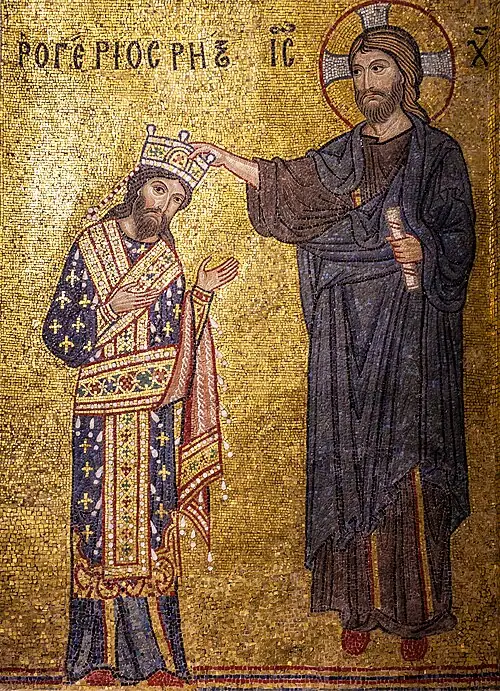
Detail of a mosaic showing Roger II (Rogerios Rex in Greek letters) receiving the crown from Jesus Christ (IC), Martorana, Palermo.
Roger II and the Kingdom of Sicily
Roger I died in 1101, leaving his successors to consolidate the Norman territories. His son Roger II eventually brought together the Sicilian inheritance and the mainland possessions of the Hauteville dynasty. On Christmas Day 1130, Roger was crowned King of Sicily in Palermo, establishing a monarchy that united Sicily with extensive territories in southern Italy.
Yet the new kingdom’s legitimacy was contested from the outset. Roger’s royal title had been authorised by Anacletus II, one of two rival claimants elected to the papacy in 1130. While Roger recognised Anacletus as the legitimate pope, his rival, Innocent II, rejected the new kingdom and opposed Roger’s claim to kingship. What appeared to be the culmination of Norman expansion therefore became entangled in a wider struggle over papal authority.
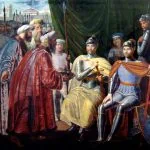
The dispute continued until 1139, when Innocent II was defeated and captured by Norman forces at Galluccio. Under considerable pressure, the pope formally recognised Roger’s kingship in an agreement associated with the Treaty of Mignano. The episode illustrated how closely military success and political legitimacy remained intertwined in the Norman rise to power.
Despite these difficulties, the kingdom represented the culmination of more than a century of Norman expansion. Its rulers commanded a formidable strategic position in the central Mediterranean, controlling ports, agricultural resources and commercial routes linking Latin Europe, Byzantium and North Africa.
A Multicultural Mediterranean State
Norman Sicily became notable for its combination of Latin, Greek and Arabic administrative and artistic traditions. Rather than attempting to replace every existing institution, its rulers adopted and adapted practices that served the needs of government.
Under Roger II, Arabic regained prominence in elements of royal administration, while Greek and Latin remained in use. The royal court employed officials familiar with different languages and traditions, reflecting the practical requirements of governing a diverse population (Johns, 2002).
This cultural interaction found particularly striking expression in Palermo’s royal architecture. The Palatine Chapel, commissioned under Roger II, combined Byzantine mosaics, Islamic-influenced decorative forms and Latin Christian religious patronage.
Nevertheless, the kingdom should not be romanticised as a society of unrestricted religious tolerance. Communities enjoyed different rights and privileges, but the monarchy and its supporters concentrated political authority in their hands.
As Joanna Drell (1999) argues, cultural exchange did not eliminate the distinct identities of the peoples who inhabited Norman southern Italy and Sicily.
The Norman Legacy in Malta
For Malta, incorporation into the expanding Norman sphere marked the beginning of a longer political reorientation towards the Latin Christian world.
The islands became increasingly connected to the rulers and institutions of Sicily, but their social and linguistic transformation occurred gradually. The Arabic vernacular spoken in medieval Malta survived the transition to Christian rule and developed over subsequent centuries into Maltese, a Semitic language whose grammatical foundations and much of its core vocabulary derive from Arabic. Sustained contact with Sicilian and Italian later introduced a substantial Romance element without altering the language’s fundamentally Semitic character.
The endurance of this linguistic inheritance is a reminder that political conquest and cultural change rarely proceed at the same pace.
Malta’s medieval history therefore cannot be reduced to a transition from Muslim to Christian rule in 1091. The process involved changing political loyalties, the gradual development of Latin Christian institutions and the persistence of traditions inherited from earlier centuries.






Luciano Anastasi
Luciano is the founder of the MedievalHistory platform and the LinkedIn History Enthusiasts Group, where he is dedicated to curating and sharing high-quality medieval history content. His goal is to engage scholars, teachers, students, and enthusiasts by fostering insightful discussions and promoting scholarly resources on topics from medieval warfare and religion to societal transformations and daily life in the Middle Ages.
Luciano is also an active book reviewer, focusing on academic publications related to medieval history. He recently collaborated with Yale University Press to review forthcoming medieval history titles, aiming to deepen educators' and researchers' understanding of the period. Alongside his history endeavors, he has over 40 years of experience in IT leadership roles across various industries, including the public sector, banking, insurance, airlines and consulting, and has contributed to United Nations projects.
With a Master of Arts in Business Process Management, Luciano combines his expertise in IT strategy and governance with his passion for medieval history. He leverages technology to bridge the academic community and the wider public, making historical scholarship more accessible through engaging online content.