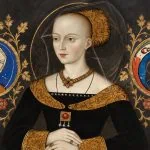
The Strange Second Life of St Gildas
- 20 October 2026
- 0 Comment
- 15 Min Read


St Gildas
Gildas and the Origins of Arthurian History
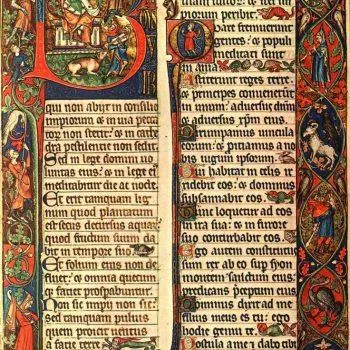
The De Excidio et Conquestu Britanniae, or Ruin and Conquest of Britain by Gildas, is often considered the first text in the Arthurian canon, serving as a starting point for many of the historical and pseudo-historical works that followed it. ⁱ
The Saxon Invasions and the Battle of Mount Badon
The first book or section of the Conquestu Britanniae rushes through the Roman conquest and settlement of Britain before covering the Romans’ eventual withdrawal from Britain and the subsequent trials and tribulations of the Britons as new kingdoms and polities rose to fill the power vacuum. The principal threat to the peace of Britain and the security of these fledgling entities was an influx of land-hungry Saxon mercenaries turned raiders from the continent. Britons and Saxons both fought fiercely, engaged in a long, bloody and largely indecisive war that culminated in the Britons’ spectacular victory at the siege of Mons Badonicus, also known as Mount Badon or Badon Hill. The Saxons’ defeat was so stinging that it depleted their manpower and removed them as a threat to the Britons’ kingdoms for a generation.
Ambrosius Aurelianus and the Missing King Arthur
At its face, it all seems very classically Arthurian. Later writers would recast Badon Hill as the most significant and greatest of Arthur’s victories, yet Gildas makes no mention of Arthur whatsoever. Instead, he depicts the battle against the Saxons as being spearheaded by a man called Ambrosius Aurelianus. As his name suggests, Gildas portrays both Ambrosius’ ancestry and his modes of behaviour as essentially Roman. As presented by Gildas, he is an avatar of the old world, now sadly lost. An important element of that depiction is Gildas’ portrayal of Ambrosius Aurelianus as a virtuous and pious man who won what victories he had through the support and blessings of God. While Gildas’ account actually fails to specify who led the Britons to victory at Mons Badonicus, he stresses that the still thoroughly Romanised and deeply Christian Ambrosius was the original architect of Brittonic resistance to Saxon expansion.
A Religious Warning Rather Than a History
Upon close inspection of its content, it is clear that the true purpose of the De Excidio et Conquestu Britanniae was not to educate future generations by providing them with knowledge of Roman Britain and the circumstances of the Saxon invasion of Britain. Nor was it, like so many of its successors in the Arthurian tradition, meant to entertain. Instead, it was a polemic aimed primarily at a contemporary audience, warning them of the sins and iniquities surrounding them.
The Sins of Britain’s Five Kings
Having outlined the vague history of Britain from the Roman Conquest and occupation to the Britons’ victory over the Saxons at Mount Badon, in his work’s first section, Gildas launches into a series of fiery polemics. The subjects of Gildas’ ire in his history’s second section are five contemporary or near-contemporary British kings whose conduct and lack of piety Gildas thoroughly lambasts. ⁱⁱ His overall thesis for this section is that the cupidity, greed and pride of these kings and others like them led the Britons to once more war against themselves, squandering the opportunities won at Mount Badon and leading to a Saxon resurgence. Presumably this exercise was undertaken not just to apportion blame but also to warn his fellow Britons of the danger they found themselves in, as well as the pit traps and self-destructive behaviours they must avoid to reverse the situation. ⁱⁱⁱ
Corrupt Clergy and Divine Punishment
The third and final section of the De Excidio et Conquestu Britanniae continues this theme by railing against the corruption and iniquities of Britain’s clerics. Indeed, Gildas holds Britain’s clerics no less accountable for the unfolding calamity of the Saxon invasion than he does the infighting and skewed priorities of Britain’s kings. This polemical approach, which anchors the explanation for military defeat and societal upheaval in irreligiosity and sin, is a recurring theme in Christian political thought.
How, the argument ran, could God allow a Christian empire or society to fall or be reduced to a state of wretchedness by Pagans? One explanation was that they were being punished for their impiety and sins. Roman clerics and historians were forced to grapple with the same philosophical and theological dilemma as the political and military structures of the empire collapsed around them. A scholar of Gildas’ obvious education would almost certainly be aware of this tradition and the Romans’ claim, almost a century earlier, that the appearance of Attila and his Hunnic horde within the Empire was a result or direct manifestation of the wrath of God.
The Historical Gildas and His Life in Brittany
Little concrete or verifiable evidence is actually known about Gildas or his life. He was evidently a British monk of considerable education and resources, writing sometime in the late fifth or perhaps early sixth century. Sometime after the completion of the Ruin and Conquest of Britain, Gildas, like many other Britons, relocated across the Channel to Brittany to escape further conflict with the Saxons. Perhaps he did so in part out of disappointment that his work had failed to spark a moral and military revival among his fellow Britons. In Brittany he became the abbot, perhaps even founder, of a monastery at Saint-Gildas-de-Rhuys. ⁱᵛ

Exterior of Église abbatiale de Saint-Gildas-de-Rhuys
The First Life of St Gildas and the Making of a Saint
Gildas makes no mention of Arthur in his account of the Britons’ war against the Saxons, yet somehow, he would find himself reinvented as a literary character, deeply enmeshed in the expanding Arthurian legends. As a result of his fame as an author and proponent of monasticism, Gildas was later venerated as a saint and the subject of two separate hagiographies, a sort of specialised biography for saints. Unfortunately, both Lives of Saint Gildas are removed from their subject by several centuries and are shaped in a large part by their desire to promote the Cult of Gildas and justify his veneration as a saint. The first of these hagiographical works was produced by an anonymous monk labouring in Gildas’ foundation at Rhuys sometime in the ninth century. Gildas was buried at Rhuys, and the monks there would have gained considerable prestige and financial rewards in the form of increasing donations and pilgrims should their attempt to promote his sainthood gain traction.
From British Prince to Missionary and Miracle-Worker
According to this account, Gildas was no mere monk but a prince. His father, Caw, was the king of a Brittonic realm located around the Strathclyde region in what is today Scotland and centred upon a fortified settlement built atop Dumbarton Rock. His anonymous biographer claims Gildas himself was born on the banks of the Clyde. As a youth, he was sent to study under St Illtud, then an abbot in Glamorgan, and later one of the Britons most widely celebrated and venerated saints.
Gildas was so inspired by Illtud’s teachings that he neglected the secular portion of his education, eventually forsaking his royal heritage entirely to become a missionary in Ireland. His activities there soon brought him to the attention of the High King of Ireland, Ainmuire mac Sétnai, who put him in charge of reorganising and restructuring the Church in Ireland. He later travelled to Italy, where he fought a dragon and toured the former imperial capitals of Rome and Ravenna. He then settled in Britanny, where he interacted with yet more future saints before founding the monastery at Rhuys.
Questioning the Historical Accuracy of Gildas’s Biography
It is somewhat unclear when, in this account of his life, Gildas was supposed to have written the De Excidio et Conquestu Britanniae. Besides the aforementioned problems of chronology and genre, which create considerable scope for distortion and inaccuracy, Gildas’ life, as presented in the hagiography, does not tally particularly closely with the information that can be gleaned about him through his writing. For example, when De Excidio et Conquestu Britanniae discusses geography and politics in its second and third books, it is almost entirely concerned with the polities of southwestern England. A northern prince would have taken a wider view, particularly when discussing events as momentous as the erosion of the Brittonic kingdoms and the resurgence of the Saxons. ᵛⁱ Overall, there is some reason to be suspicious of the accuracy of this first iteration of the Life of Gildas.
Caradoc of Llancarfan and Gildas at Arthur’s Court
Unfortunately, the second attempt to write a hagiography of Gildas is even more problematic. ᵛⁱⁱ It was written considerably later than its predecessor and provides no meaningful historical evidence or useful context through which to view his writing. Written in the twelfth century by Caradoc of Llancarfan, a contemporary, collaborator and friend of Geoffrey of Monmouth, the Life seeks to reposition Gildas and his work within an explicitly Arthurian context. Gildas appears in this story as a contemporary and sometimes ally of Arthur; indeed, it is faithful Gildas who skilfully negotiates the release of Arthur’s queen, Guinevere, after she is kidnapped by the villainous King Mewlas.
Arthur, Hueil mab Caw and the Expanding Legend
Saint and King did not always share such a positive relationship, though. Arthur captured and executed Gildas’ brother, Hueil mab Caw, after he presided over a series of raids upon Arthur’s northern border. Mythologies and legends grow over time, but they often do so in an unfocused self-referential manner, doubling back and twisting over one another. King Caw appears as the father of as many as twenty individuals throughout the entirety of the pre-Galfridian tradition, none of whom were mentioned in the original Life of Gildas.
Somewhat bizarrely, Gildas is one of several family members who became saints, an honour he rather suspiciously shared with at least five of his siblings. A recurring occurrence in both the Pre- and Post-Galfridian traditions is that individual authors deliberately referenced earlier works in the Arthurian legends to enrich their own creations and imbue them with an enhanced sense of legitimacy. Caradoc, in writing a new Life of Gildas in which the saint is deeply integrated into the Arthurian court, was probably seeking to redress Gildas’ isolation from the Arthurian canon that was built atop his writings.
How Medieval Writers Turned History into Legend
In addition to Caradoc and Geoffrey of Monmouth, the various and anonymous Welsh writers, whose works swelled the number of King Caw’s children, were probably also indulging in this phenomenon. By placing potential saints or heroic protagonists within a prestigious family already established in Welsh literary culture, these writers were imbuing their characters with a borrowed prestige. Gradually, these layers of artifice and storytelling build on one another until their artificial, but mutually reinforcing, areas of overlap begin to appear organic.
The Enduring Legacy of St Gildas
The historical Gildas saw the cultural and societal decline of Post-Roman Britain as intimately and invocably connected to its political and military defeat. To Gildas, the encroaching pagan Saxons and the petty self-aggrandising wars of the Britons both represented the collapse of the older and more virtuous civilisation that he and his advanced learning were the last manifestations of. Perhaps then, Gildas would be grateful for the irony that large sections of the De Excidio et Conquestu Britanniae were used by a Saxon or English monk, Bede, in his history of Britain centuries later and that the monastic traditions and classical learning that Gildas feared were lost forever would ultimately continue to thrive and percolate. ᵛⁱⁱⁱ Geoffrey of Monmouth would incorporate elements taken from the works of both men into Historia regum Britanniae. As we have seen, this pseudo-history was so popular it inspired Gilda’s monastic successors to completely reinvent the story of his life.




Dr James Turner
Dr James Turner attended the University of Glasgow before undertaking his doctoral studies at Durham University. Deeply afraid of numbers and palaeography, his main research interests surround medieval aristocratic culture and identity as well as the idea of a global and interconnected Middle Ages. He lives and works near a beach in South Ayrshire and is a regular contributor to Medivalist.net.