The Uprising: How Accurate Is the 2026 Film?
- Luciano Anastasi
- 15 October 2026
- 0 Comment
- 12 Min Read


Medieval Accuracy Meter
THE UPRISING: HISTORICAL ANALYSIS
Introduction: England on the Brink of Rebellion
In June 1381, thousands of ordinary English people challenged the authority of their king. Angered by taxation, restrictive labour laws and abuses of power, rebels from Essex, Kent and elsewhere marched towards London, demanding changes to a social order that had governed their lives for generations.
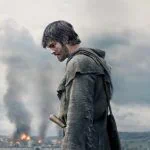
Directed by Paul Greengrass, The Uprising (2026) revisits this extraordinary episode through the experiences of a fictional agricultural worker known as the Ploughman, played by Andrew Garfield. Cosmo Jarvis portrays Wat Tyler, Jamie Bell plays the radical priest John Ball, and Woody Norman appears as the young Richard II.
Released in September 2026 in the United States and October in Britain, the film applies Greengrass’s characteristic handheld camerawork to medieval England, creating an atmosphere of urgency and political unrest. The director’s previous films, including United 93 and Captain Phillips, established his reputation for immersive storytelling, although here he ventures into a period whose surviving evidence presents rather different challenges.
The historical premise is compelling. My reservation concerns the decision to place an invented hero at the centre of a rebellion whose greatest achievement was precisely its collective character.
Plot Overview: From Ploughman to Rebel
Set in England still suffering the consequences of the Black Death, the story follows the Ploughman, who has lost his family to plague and finds himself increasingly alienated from a society dominated by landlords and royal officials.
His resentment of taxation and injustice draws him into a wider rebellion, bringing him into contact with Wat Tyler and John Ball. As resistance spreads, the insurgents advance towards London, where Richard II and his advisers confront a crisis that threatens the stability of the kingdom.
Greengrass frames the conflict through the contrasting experiences of commoners and elites. The narrative is deliberately accessible, although its emphasis on individual heroism sometimes overshadows the complicated political objectives of the historical rebels.
FACT vs. FICTION ANALYSIS
The Black Death and Economic Inequality
The film correctly identifies the Black Death as an important background to the rebellion. Beginning in 1348, the plague devastated England’s population, producing labour shortages that strengthened the bargaining position of surviving workers.
Landowners resisted these changes, while the Statute of Labourers of 1351 sought to restrict wages and reinforce labour regulations. By 1381, the resulting disagreements had contributed to decades of resentment.
However, medieval society was more complex than the film’s portrayal of impoverished peasants confronting uniformly wealthy oppressors. Some agricultural workers benefited from improved opportunities, while others remained bound by customary obligations. As Juliet Barker (2014) demonstrates, the rebellion attracted participants from diverse economic and social backgrounds.
Greengrass captures the underlying inequalities but exaggerates the uniformity of rural hardship.
The Poll Tax: An Authentic Cause
The film’s treatment of taxation is among its strongest historical elements. England’s prolonged war with France imposed considerable financial demands, prompting Parliament to authorise successive poll taxes in 1377, 1379 and 1380.
The final levy, collected in 1381, required a standard payment of twelve pence from individuals over fifteen, subject to arrangements for differing levels of wealth. Renewed collection efforts provoked resistance, particularly in Essex.
Yet the rebellion was never exclusively about taxation. Participants also challenged labour obligations, manorial privileges and abuses of local government. The film captures the immediate catalyst more successfully than the broader range of demands that emerged.
The Ploughman: An Invented Revolutionary
Andrew Garfield’s Ploughman is a fictional creation rather than a documented leader of the revolt. His personal tragedy provides an emotional route into the historical events, but his prominence introduces a familiar weakness of historical cinema: the transformation of collective action into the achievement of an exceptional individual.
This approach is particularly unfortunate given the remarkable organisation demonstrated by the actual rebels. Communities coordinated resistance, attacked administrative institutions and destroyed records that supported unpopular manorial obligations.
The Ploughman also recalls the literary figure of Piers in William Langland’s Piers Plowman. The parallel is suggestive, given the poem’s concern with labour and Christian morality, but it should not be mistaken for a historical connection.
Wat Tyler and John Ball
Unlike the Ploughman, Wat Tyler and John Ball were historical personalities. Tyler emerged as a leading figure among the Kentish rebels, although his earlier life remains obscure. The film is justified in portraying him as influential, but much of his dialogue and personal behaviour must necessarily be reconstructed.
John Ball offers an equally compelling character. His preaching challenged hereditary privilege through Christian arguments about humanity’s common origins, traditionally expressed in the question:
When Adam delved and Eve span, who was then the gentleman?
Ball’s criticism was radical within its medieval context, but he was not advocating modern secular democracy. His beliefs belonged to a Christian intellectual world in which questions of equality and justice were inseparable from religious teaching.
Greengrass recognises the political force of these ideas, although the film occasionally allows modern attitudes to shape the rebels’ aspirations.
Richard II and the Confrontation at Smithfield
Richard II was only fourteen during the Peasants’ Revolt of 1381. His government relied heavily on senior advisers, including Archbishop Simon Sudbury and Treasurer Robert Hales, both of whom the rebels killed during the uprising. Although the film portrays royal authority as largely resistant to reform, the historical Richard played a more active and complicated role.
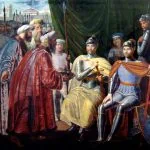
On 14 June, Richard met the rebels at Mile End and agreed to substantial concessions, including the abolition of serfdom. Royal charters granting these freedoms were prepared, prompting many rebels to return home believing their demands had been accepted (Barker, 2014). The following day, Richard met Wat Tyler and other rebels at Smithfield, where an altercation ended with Tyler’s fatal wounding. London mayor William Walworth played a central role, although contemporary chroniclers differ over the precise circumstances.
The film transforms Smithfield into a deliberate royal ambush, but there is no convincing historical evidence that the meeting was a prearranged massacre. The more consequential betrayal came afterwards, when Richard’s government revoked the promised freedoms on 2 July and moved to suppress the remaining resistance.
In my view, the historical events are more revealing than the film’s dramatised confrontation. The rebels had compelled a young monarch to concede reforms that challenged established privileges, only to see those promises withdrawn once royal authority was restored. The political significance of that reversal hardly requires cinematic embellishment.
Robin Hood: History Gives Way to Legend
Perhaps the most questionable association surrounding The Uprising is Robin Hood. American promotional material briefly presented the film as an origin story, although the character is not explicitly identified as Robin Hood within the film.
The historical problem is straightforward. Robin Hood stories circulated before 1381, with a reference appearing in the late fourteenth-century B-text of Langland’s Piers Plowman, generally dated before the rebellion.
There is no credible evidence connecting the Peasants’ Revolt directly to the origins of the outlaw legend.
The comparison between popular resistance and outlaw mythology may work symbolically, but it is historically unsupported. I consider this association unnecessary, particularly when the actual rebellion offers such rich dramatic possibilities.
Production and Aesthetics: A Medieval World of Mud and Violence
Greengrass presents a visually unforgiving England of muddy roads, weathered clothing and oppressive buildings. His handheld camerawork brings immediacy to the disorder, although its constant movement can make the historical setting feel more like a modern conflict zone than a fourteenth-century society.
The distinction between poorly equipped rebels and armoured royal forces is broadly plausible, but medieval military equipment was more varied. Mail remained common alongside developing plate protection, while rebels might possess bows, spears, bills and other purpose-made weapons rather than relying exclusively upon agricultural tools.
The relentlessly grim appearance also deserves qualification. Medieval clothing could be colourful, churches richly decorated, and rural households relatively prosperous. Dirt and darkness are effective cinematic devices, but neither guarantees authenticity.
Modern English dialogue is understandable, although political expressions occasionally impose contemporary assumptions upon medieval characters.
Critical Reception and Historical Value
The film has received mixed reviews, with critics divided over its visual intensity and historical interpretation. On Rotten Tomatoes, it currently holds a 56% critics’ score and a 65% verified audience score.
Peter Bradshaw criticised its Robin Hood associations, while the Financial Times praised its energetic reconstruction of a neglected medieval rebellion. Such disagreement reflects the difficulty of balancing dramatic storytelling with historical interpretation.
For history enthusiasts, the film’s principal achievement is its revival of interest in 1381. Its limitation is the tendency to portray a sophisticated popular movement primarily through personal suffering and heroic resistance.

MEDIEVAL ACCURACY METER
Historical Accuracy
To evaluate the Uprising’s historical fidelity, we can score key aspects of its portrayal of the Middle Ages. Each category is rated for accuracy on a scale of 0% to 100%.
Historical Setting: 62% (Weight: 40%)
Sub-scores: Worldbuilding & Geography 3.5/5; Architecture & Fortifications 3/5; Material Culture & Technology 3/5; Costumes, Arms & Armour 3/5; Language & Names 3/5.
The film earns 62% for its generally convincing reconstruction of late fourteenth-century England, particularly its rural landscapes, village settlements and contrasts between ordinary labourers and the ruling elite. Clothing, agricultural implements and military equipment broadly reflect the period, although the film sometimes exaggerates the distinction between poorly armed peasants and heavily equipped royal forces. Greengrass’s preference for muddy streets, worn garments and oppressive surroundings creates a compelling atmosphere but reinforces the familiar cinematic misconception that medieval life was uniformly bleak and impoverished. Modern English dialogue is understandable, although some political expressions feel distinctly contemporary. Overall, the setting communicates the hardships of 1381 effectively, but its visual authenticity occasionally comes at the expense of historical nuance.
Characters & Culture: 60% (Weight: 30%)
Sub-scores: Social Roles & Institutions 3.5/5; Beliefs, Religion & Mentalities 3.5/5; Law, Custom & Everyday Life 3/5; Behavioural Plausibility 3/5; Anachronistic Attitudes 2/5.
The film receives 60% for its recognisable portrayal of medieval society and the historical figures involved in the Peasants’ Revolt. Wat Tyler, John Ball, Richard II and senior royal officials are appropriately placed within the political and social structures of the period, while the depiction of religious criticism and resentment towards manorial obligations reflects genuine contemporary grievances. However, Andrew Garfield’s fictional Ploughman becomes the principal vehicle for a fundamentally collective rebellion, reducing the historical importance of regional communities and their varied objectives. John Ball’s religious arguments sometimes acquire a distinctly modern political character, while the contrast between oppressed commoners and self-serving elites oversimplifies medieval social relationships. The characters are dramatically effective, but their motivations and behaviour do not always reflect fourteenth-century attitudes.
Events & Timelines: 56% (Weight: 30%)
Sub-scores: Chronology Fidelity 3.5/5; Causality & Consequences 3/5; Battles & Sieges Representation 2/5; Political Entities & Titles 4/5; Impact of Invented Characters 1.5/5.
The film achieves 56% for preserving the principal historical circumstances of the 1381 rebellion while taking substantial liberties with its development and presentation. The poll tax, economic grievances following the Black Death, the involvement of Wat Tyler and John Ball, and the confrontation with Richard II provide an authentic historical framework. Nevertheless, the rebellion’s complex organisation is simplified into a narrative largely driven by the fictional Ploughman, while the events surrounding London and Smithfield are reshaped to accommodate a more conventional action climax. The association with Robin Hood, particularly in the film’s American marketing, is historically unsupported, since the outlaw tradition predates the revolt. Although the chronology and principal political figures remain recognisable, the extent of fictionalisation weakens the film’s representation of how the rebellion unfolded and why it ultimately failed.
Final Verdict: 60% — Mixed Historical Accuracy
Combining the weighted category scores produces an overall historical accuracy rating of 59.6%, rounded to 60%, placing The Uprising within the Mixed category of the HistoryMedieval Accuracy Meter.
The Uprising is an interesting historical drama that does a good job of showing the economic, political, and social problems that led to the Peasants’ Revolt of 1381. However, its reliance on an invented protagonist, simplified medieval attitudes and dramatised confrontations diminishes the historical complexity of an extraordinary popular movement. In my view, the film’s greatest weakness is its apparent need to manufacture an individual hero when the documented achievements of the rebels themselves provide a sufficiently compelling story. It succeeds in recreating the atmosphere of rebellion but is considerably less reliable in reconstructing the events and personalities that shaped it.
Enjoyed this Article?
Join The Medieval Chronicle on Substack for weekly medieval discoveries, book notes, and behind-the-scenes commentary from HistoryMedieval.
RECOMMENDED BOOKS
This website uses affiliate links. If you purchase via these links, we might earn a commission that contributes to sustaining the HistoryMedieval.com platform.


RELATED ARTICLES


SOURCES
- Bradshaw, P. (2026, October 7). The Uprising review – Paul Greengrass turns revolutionary rage into a Robin Hood origin myth. The Guardian. https://www.theguardian.com/film/2026/oct/07/the-uprising-review-paul-greengrass-andrew-garfield-peasants-revolt
- Campbell, C. (2026, September 9). The Uprising first reviews: Andrew Garfield elevates a gritty but uneven epic. Rotten Tomatoes. https://editorial.rottentomatoes.com/article/the-uprising-first-reviews/
- Clarke, D. (2026, October 8). The Uprising review: Paul Greengrass’s touch seems to have left him. The Irish Times. https://www.irishtimes.com/culture/film/review/2026/10/08/the-uprising-review-paul-greengrasss-touch-seems-to-have-left-him-and-no-sign-of-robin-hood/
- Myers, O. (2026, September 9). The Uprising review – the peasants are revolting in muddled historical epic. The Guardian. https://www.theguardian.com/film/2026/sep/09/the-uprising-movie-review
COPYRIGHT, LICENSING AND DISCLOSURE
© HistoryMedieval. This article is licensed under the Creative Commons Attribution–NonCommercial–NoDerivatives 4.0 International licence (CC BY-NC-ND 4.0).
You may share this article unchanged for non-commercial purposes, provided that full credit is given to the author and HistoryMedieval, a link to the licence is included, and online republication links back to the original article on HistoryMedieval.com. Adaptation, translation, abridgement or commercial reuse requires prior written permission.
Third-party images and materials may be subject to separate copyright or licensing terms. For copyright concerns, contact info@historymedieval.com. We will review the matter and take any necessary corrective action.
This article may contain affiliate links. We may earn a commission from qualifying purchases at no additional cost to the buyer.

Luciano Anastasi
Luciano is the founder of the MedievalHistory platform and the LinkedIn History Enthusiasts Group, where he is dedicated to curating and sharing high-quality medieval history content. His goal is to engage scholars, teachers, students, and enthusiasts by fostering insightful discussions and promoting scholarly resources on topics from medieval warfare and religion to societal transformations and daily life in the Middle Ages.
Luciano is also an active book reviewer, focusing on academic publications related to medieval history. He recently collaborated with Yale University Press to review forthcoming medieval history titles, aiming to deepen educators' and researchers' understanding of the period. Alongside his history endeavors, he has over 40 years of experience in IT leadership roles across various industries, including the public sector, banking, insurance, airlines and consulting, and has contributed to United Nations projects.
With a Master of Arts in Business Process Management, Luciano combines his expertise in IT strategy and governance with his passion for medieval history. He leverages technology to bridge the academic community and the wider public, making historical scholarship more accessible through engaging online content.