Marco Polo: The Truth About Kublai Khan and His Court
Medieval Accuracy Meter
HISTORICA SCORE
53%
Overview
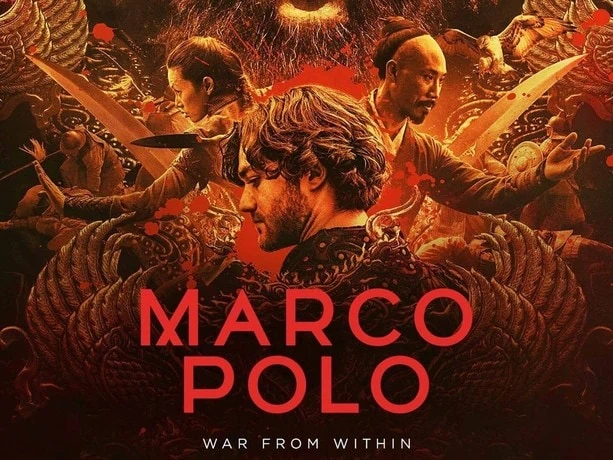
Released in 2014, Netflix’s Marco Polo explores the world of Kublai Khan and the Mongol Empire. This historical review examines the series’ characters, political intrigues, warfare, costumes and chronology, separating documented medieval history from dramatic invention.
Cite This Work
Anastasi, L. (2026, November 21). Marco Polo: The Truth About Kublai Khan and His Court. Medieval History – Yesterday in a Nutshell. https://historymedieval.com/marco-polo-the-truth-about-kublai-khan-and-his-court/
HOW ACCURATE IS NETFLIX’S MEDIEVAL EPIC
Introduction: Marco Polo and the World of Kublai Khan
When Netflix released Marco Polo on 12 December 2014, it attempted something relatively unusual for a major television production: placing medieval Asia, rather than Europe, at the centre of an ambitious historical drama.
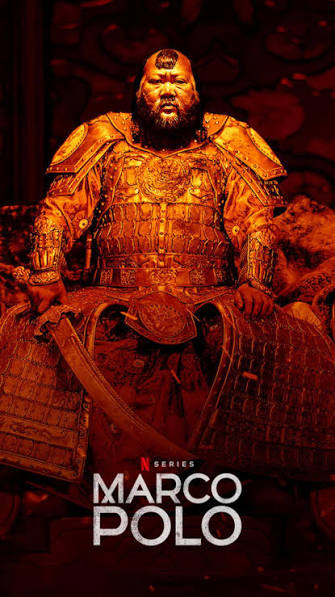
Created by John Fusco, the series follows the Venetian traveller Marco Polo, played by Lorenzo Richelmy, during his years at the court of Kublai Khan, portrayed by Benedict Wong. Its combination of imperial politics, military campaigns, martial arts and personal rivalries invited comparisons with Game of Thrones.
The production reportedly cost approximately $90 million for its first season. Despite its impressive scale, critical reception was disappointing, and Netflix cancelled the series in December 2016 after two seasons.
Its historical setting, however, remains fascinating. Kublai Khan’s reign witnessed the Mongol conquest of China, the establishment of the Yuan dynasty and extensive exchanges between distant parts of Eurasia. How faithfully does the series portray that extraordinary medieval world?
Overview: A Venetian at the Mongol Court
The story begins with young Marco Polo arriving in the territory of Kublai Khan after an arduous journey from Venice. His merchant father leaves him at the imperial court, where Marco becomes both a valuable outsider and a politically vulnerable dependent.
As Marco learns to navigate this unfamiliar environment, he encounters rival Mongol princes, Chinese officials, religious figures and members of the imperial household. The principal conflict involves Kublai’s determination to defeat the Southern Song dynasty, whose territories remain outside Mongol control.
Political conspiracies, forbidden relationships and military campaigns dominate the narrative. Although Marco provides the audience’s introduction to the Mongol world, Kublai Khan gradually emerges as its most compelling character.
FACT vs. FICTION ANALYSIS
Marco Polo’s Arrival and Position at Court
The historical Marco Polo was born around 1254 and departed Venice in 1271 with his father Niccolò and uncle Maffeo. The elder Polos had previously visited Kublai Khan, making their second journey part of an established commercial and diplomatic relationship.
According to the standard reconstruction of his travels, Marco reached Kublai’s court in 1275, rather than the earlier timeframe required by several events depicted in the series (Bernardini, 2008).
Marco’s own account describes his employment on imperial assignments and his familiarity with territories throughout Asia. However, historians cannot independently confirm every position or journey attributed to him, and surviving Chinese administrative records do not identify him unambiguously.
Netflix transforms this uncertain historical relationship into an elaborate story of espionage, military advice and personal intervention. Marco’s presence at court is plausible, but he is portrayed as having extraordinary influence over imperial decisions.
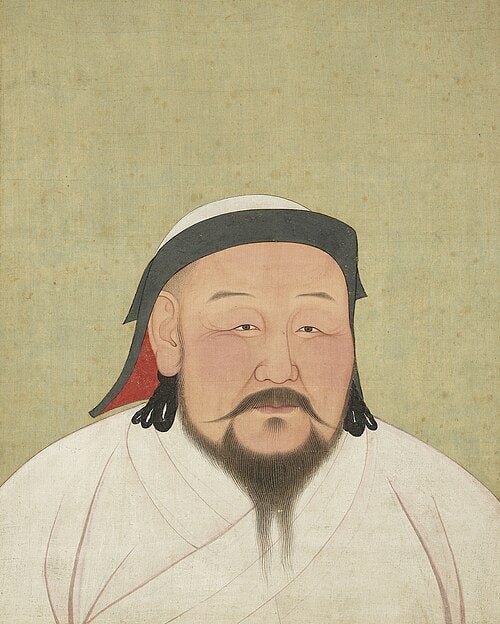
Portrait by artist Araniko, drawn shortly after Kublai’s death in 1294
Kublai Khan: Conqueror and Chinese Emperor
Benedict Wong’s portrayal of Kublai Khan is arguably the series’ greatest historical strength. He presents a ruler struggling to reconcile Mongol traditions with the responsibilities of governing a largely Chinese population.
Kublai became Great Khan in 1260 and proclaimed the Yuan dynasty in 1271. His administration increasingly adopted Chinese governmental practices while retaining important Mongol institutions and privileges.
The series captures this tension effectively. Kublai’s dependence on administrators, advisers and family members reflects the realities of governing territories with differing political traditions.
Nevertheless, the historical Kublai was more than a warrior monarch driven by personal ambition. His reign involved taxation, trade, religious patronage, administrative reforms and diplomacy. These less spectacular responsibilities receive considerably less attention than palace conspiracies and warfare (Rossabi, 1988).
The Siege of Xiangyang: A Major Chronological Error
The siege of Xiangyang provides one of the series’ central military storylines. It also exposes its most significant departure from documented history.
Xiangyang and neighbouring Fancheng were strategically important strongholds of the Southern Song. Their resistance obstructed Mongol expansion towards the Yangtze region, and their eventual capture in 1273 was a decisive achievement.
The production correctly recognises the importance of siege warfare and sophisticated military engineering. Its mistake lies in placing Marco Polo within events that had already concluded before his documented arrival.
The historical record attributes an important contribution to Muslim siege engineers, including Isma’il and Ala al-Din, who helped introduce powerful counterweight trebuchets into the Mongol campaign.
Versions of Polo’s own travel narrative associate his family with siege-engine expertise. That account conflicts with the accepted chronology and the Chinese evidence, illustrating why medieval travel literature requires critical examination (Polo, 1903; Jackson, 2017).
The siege was real, and the engineering was important. Marco Polo’s decisive personal involvement, however, lacks credible historical support.
The Mongol Succession and Political Rivalries
Kublai’s conflict with his brother Ariq Böke offers another example of how historical events were rearranged for dramatic effect.
Their struggle for supremacy began in 1260 and ended with Ariq Böke’s surrender in 1264, approximately eleven years before Marco’s generally accepted arrival at court.
The series places this rivalry within Marco’s experience, compressing separate political crises into a single narrative.
Other political tensions are more convincingly grounded. The division of the Mongol Empire into competing branches, disputes involving figures such as Kaidu, and the difficulties of establishing imperial legitimacy were genuine challenges facing Kublai’s government.
Yet the programme repeatedly reduces complicated political relationships to personal betrayals and dramatic confrontations, which weakens its explanation of how Mongol power actually operated.
Empress Chabi, Jia Sidao and the Blue Princess
Several supporting characters were genuine historical figures, although their television portrayals vary considerably in accuracy.
Empress Chabi, played by Joan Chen, was an influential political adviser and a supporter of Tibetan Buddhism. Contemporary accounts preserve examples of her involvement in administrative decisions, making her portrayal as a politically engaged consort particularly credible (Rossabi, 1988).
Jia Sidao, the Southern Song chancellor, also existed. He was an important political figure during the final years of Southern Song resistance, although the series exaggerates his martial abilities and personal involvement in violent conspiracies.
Princess Kokachin presents a more substantial distortion. A Mongol princess of that name travelled towards Persia in the early 1290s as part of a diplomatic marriage arrangement associated with the Polos’ return journey. Her fictional romance with Marco and the circumstances surrounding her identity in the series have no established historical foundation.
The blind martial-arts instructor Hundred Eyes is similarly a dramatic construction rather than an identifiable historical tutor of Marco Polo.
Religion, Culture and Everyday Life
One of the series’ strongest achievements is its recognition that the Mongol Empire was culturally diverse. Buddhist monks, Muslim advisers, Christian communities and practitioners of traditional Mongol beliefs all belonged to the wider imperial world.
Kublai’s patronage of Tibetan Buddhism was historically significant, while Muslim and Central Asian specialists contributed to administration, commerce and technological exchange.
The programme sometimes exaggerates this diversity into a succession of exotic rituals, sexual intrigues and mystical encounters. These scenes can reinforce familiar stereotypes about medieval Asia rather than illuminate its complex institutions.
Even so, its portrayal challenges the notion that the Middle Ages were exclusively a European historical experience. The Yuan court was a remarkable meeting place for peoples, technologies and religious traditions (The Metropolitan Museum of Art, 2010).
Mongol Warfare, Weapons and Armour
The series deserves credit for presenting mounted warfare, composite bows, fortified cities and siege machinery as essential features of Mongol military power.
Historical Mongol soldiers used equipment adapted to their roles and circumstances. Lamellar armour, made from overlapping leather or metal plates, was particularly common, while mail and other forms of protection were also known.
The production’s elaborate armour occasionally favours decorative impact over practical effectiveness. Its sword fights and martial-arts encounters also exaggerate individual combat at the expense of collective discipline, mobility and coordinated military tactics.
These liberties are understandable in an action drama, but they can obscure the organisational strengths that made Mongol armies so successful.
Production, Costumes and Historical Atmosphere
Filmed in Italy, Kazakhstan and Malaysia, Marco Polo benefits from its expansive landscapes and elaborate sets. Costume designers Timmy Yip and Jo Korer undertook considerable research, producing thousands of costumes and accessories.
The richly decorated robes, textiles and courtly garments convey the wealth and cultural diversity of the Yuan elite. Nevertheless, the architecture sometimes resembles a generalised vision of imperial China rather than a precise reconstruction of thirteenth-century buildings.
English-language dialogue makes the narrative accessible but disguises the multilingual character of the Mongol court, where Mongolian, Chinese and other languages played important roles. Names and titles are generally recognisable, although pronunciation and linguistic conventions are simplified.
The visual achievement is considerable, even where historical accuracy gives way to dramatic spectacle (Miller, 2014).
Critical Reception and Historical Value
Contemporary critics generally admired the production’s scale more than its storytelling. James Poniewozik’s 2014 review in Time, for example, criticised its excessive reliance on spectacle, familiar character types and sensationalism.
The series nevertheless offers history enthusiasts a compelling introduction to Kublai Khan and the Mongol world, particularly through Wong’s performance.
Its educational value lies principally in stimulating interest rather than providing a dependable reconstruction. Viewers should distinguish the historical personalities and political developments from the invented relationships and rearranged events that structure much of the drama.

MEDIEVAL ACCURACY METER
0
%
Historical Setting
0
%
Characters and Culture
0
%
Events & Timelines
FINAL VERDICT
0
%
Historical Accuracy
To evaluate Marco Polo’s historical fidelity, we can score key aspects of its portrayal of the Middle Ages. Each category is rated for accuracy on a scale of 0% to 100%.
Historical Setting: 64% (Weight: 40%)
Sub-scores: Worldbuilding & Geography: 4; Architecture & Fortifications: 3; Material Culture & Technology: 4; Costumes, Arms & Armour: 3; Language & Names: 2.
Marco Polo succeeds in recreating the geographical scale, cultural diversity and visual splendour of the Mongol Empire under Kublai Khan. Its depiction of imperial courts, fortified cities, siege engineering and the movement of peoples across Eurasia provides a broadly convincing impression of the thirteenth-century world. The costumes and material culture reflect considerable production research, particularly in their portrayal of elite clothing and courtly luxury. However, architectural details sometimes favour a generalised image of imperial China rather than a historically precise reconstruction, while weapons and armour occasionally prioritise appearance over practicality. The extensive use of modern English also obscures the multilingual environment of Kublai’s court. These shortcomings prevent an otherwise impressive visual reconstruction from achieving a higher historical accuracy score.
Characters & Culture: 60% (Weight: 30%)
Sub-scores: Social Roles & Institutions: 4; Beliefs & Religion: 4; Law, Custom & Daily Life: 3; Behavioural Plausibility: 2; Anachronistic Attitudes: 2.
The series demonstrates a reasonable understanding of the political institutions, religious diversity and social hierarchies that characterised Kublai Khan’s empire. Its portrayal of the emperor as a ruler navigating Mongol traditions and Chinese administrative practices is particularly effective, while figures such as Empress Chabi reflect the genuine political influence exercised by women within the imperial household. Nevertheless, historical personalities are frequently reshaped to accommodate fictional romances, personal vendettas and dramatic confrontations. The portrayal of Jia Sidao as an accomplished martial artist and Marco Polo’s exaggerated influence over imperial affairs illustrate how entertainment often takes precedence over historical credibility. Although the series captures important aspects of medieval Mongol society, it substantially reduces cultural authenticity by imposing modern dramatic conventions and sensationalised behaviour on historical characters.
Events & Timelines: 40% (Weight: 30%)
Sub-scores: Chronology Fidelity: 1; Causality & Consequences: 2; Battles & Sieges: 3; Political Entities & Titles: 3; Invented Figures’ Impact: 1.
Chronological accuracy represents the series’ most significant historical weakness. The Siege of Xiangyang, which ended in 1273, is presented as an event involving Marco Polo, despite his generally accepted arrival at Kublai Khan’s court in 1275. Similarly, the succession struggle between Kublai and Ariq Böke concluded in 1264, well before Marco’s arrival, yet the series incorporates this conflict into his personal experiences. Although important historical developments, including the Mongol conquest of Southern Song China and the political rivalries within the empire, are correctly identified, their chronology and underlying causes are frequently altered. Fictional characters and exaggerated individual interventions are also given disproportionate responsibility for events shaped by complex military, political and economic circumstances. Consequently, while the series provides a recognisable outline of major historical conflicts, its substantial rearrangement of events makes it an unreliable guide to the actual sequence of Mongol history.
Final Verdict: 56% — Mixed Historical Accuracy
Marco Polo succeeds in recreating the grandeur and cultural complexity of Kublai Khan’s world, but its frequent chronological distortions and invented personal relationships considerably undermine its historical reliability. At 56%, it earns a Weak rating on the Medieval Accuracy Meter: an entertaining introduction to thirteenth-century Asia, rather than a trustworthy account of Marco Polo’s life.
Enjoyed this Article?
Join The Medieval Chronicle on Substack for weekly medieval discoveries, book notes, and behind-the-scenes commentary from HistoryMedieval.
RELATED ARTICLES
 Marco Polo: The Truth About Kublai Khan and His Court
 The Uprising: How Accurate Is the 2026 Film?
 Knightfall: Myth vs. History of the Knights Templar
 The Name of the Rose: A Medieval World Recreated
 The Pillars of the Earth: History Behind the Drama
 Medieval: Truth, Myth, and the Czech War Hero
 Rise Of The Raven: Hunyadi’s Legend On Screen
 King & Conqueror: Drama vs History in the 1066 Saga
SOURCES
- Bennett, N. (n.d.). Arms and armour of the Mongol Empire. Royal Armouries. https://royalarmouries.org/objects-and-stories/stories/the-mongols/arms-and-armour-of-the-mongol-empire
- Bernardini, M. (2008, July 28). Polo, Marco. Encyclopaedia Iranica. https://www.iranicaonline.org/articles/polo-marco/
- Emery, D. (2016, December 12). Netflix cancels ‘Marco Polo’ after 2 seasons. TheWrap. https://www.thewrap.com/netflix-cancels-marco-polo-after-2-seasons/
- Fusco, J. (Creator). (2014–2016). Marco Polo [TV series]. The Weinstein Company; Netflix. https://www.netflix.com/title/70305883
- Jackson, P. (2017). The Mongols and the Islamic world: From conquest to conversion. Yale University Press. https://yalebooks.yale.edu/book/9780300227284/the-mongols-and-the-islamic-world/
- Miller, J. (2014, December 12). Inside the 6,000 custom-made costumes of Netflix’s Marco Polo. Vanity Fair. https://www.vanityfair.com/hollywood/2014/12/marco-polo-netflix-costumes
- Polo, M. (1903). The book of Ser Marco Polo, the Venetian, concerning the kingdoms and marvels of the East (H. Yule, Trans. & Ed.; H. Cordier, Rev.; 3rd ed., Vols. 1–2). John Murray. https://wellcomecollection.org/works/j5n87wpb
- Poniewozik, J. (2014, December 11). Review: Khan job: Netflix’s ludicrous Marco Polo. Time. https://time.com/3626227/netflix-marco-polo-review/
- Rossabi, M. (n.d.). Did Marco Polo really go to China? Asia for Educators, Columbia University. https://afe.easia.columbia.edu/mongols/pop/polo/mp_essay.htm
- Rossabi, M. (1988). Khubilai Khan: His life and times. University of California Press. https://books.google.com/books?id=iFxGpHGMAZQC
- The Metropolitan Museum of Art. (2010). The world of Khubilai Khan: Chinese art in the Yuan dynasty. https://www.metmuseum.org/exhibitions/listings/2010/khubilai-khan
COPYRIGHT, LICENSING AND DISCLOSURE
© HistoryMedieval. This article is licensed under the Creative Commons Attribution–NonCommercial–NoDerivatives 4.0 International licence (CC BY-NC-ND 4.0).
You may share this article unchanged for non-commercial purposes, provided that full credit is given to the author and HistoryMedieval, a link to the licence is included, and online republication links back to the original article on HistoryMedieval.com. Adaptation, translation, abridgement or commercial reuse requires prior written permission.
Third-party images and materials may be subject to separate copyright or licensing terms. For copyright concerns, contact info@historymedieval.com. We will review the matter and take any necessary corrective action.
This article may contain affiliate links. We may earn a commission from qualifying purchases at no additional cost to the buyer.