Harem Secrets of the Ottoman Court Revealed
- 31 July 2025
- 0 Comment
- 16 Min Read

Introduction
Imagine the hushed corridors of Istanbul’s Topkapı Palace in the 16th century. Behind gilded doors and guarded gates lies the Imperial Harem – a world apart, unseen by most and alive with whispers of intrigue and power. This was no mere collection of the Ottoman sultan’s wives and concubines; it was a dynastic institution at the heart of the empire’s social and political life. Within this secluded enclave (the seraglio), hundreds of women – from the sultan’s mother and daughters to slave-girls in training – lived in a strict hierarchy, their fates entwined with the empire’s future. For nearly 150 years during the Sultanate of Women (c. 1534–1683), the harem wielded extraordinary influence over Ottoman affairs. In this narrative journey, we step past the curtain into that hidden world – to meet the formidable queen mothers, the ambitious consorts and daughters, and the watchful eunuchs who together shaped the destiny of an empire.
Sacred and Forbidden: The Meaning of “Harem”
The word “harem” derives from Arabic roots meaning sacred and forbidden. In the Ottoman context, it referred to the private, sanctified quarters of the household where only the sultan’s family and trusted guardians could enter. This protected inner world was not merely physical—it was symbolic, embodying both honour and seclusion. The term reflected the notion of a sanctuary, one inaccessible to outsiders, and became synonymous with the sultan’s female household.
From Nomadic Camps to Palace Power: Evolution of the Imperial Harem
The Ottoman Imperial Harem evolved from earlier Islamic traditions, including those of the Abbasid Caliphate and the Mamluk Sultanate, and built upon Anatolian Turkish customs, especially the Seljuk harem model. With the fall of Constantinople in 1453 and the Ottomans’ transition to a sedentary empire, the harem gained permanence and scale. The sultans ceased marrying foreign princesses, instead relying on concubines—often of slave origin—for heirs.
By the 16th century, the harem became a central institution within Topkapı Palace, its women bound to strict rules and courtly education. As the sultan’s household grew more isolated from the public, a clear hierarchy emerged, led by the sultan’s mother, the valide sultan. The harem became both a family sphere and a centre of political and social power. Women educated there were later married to high-ranking officials, extending the influence of the palace across the empire.
Inside Topkapı Palace: The Harem’s Secluded World
 The Imperial Harem occupied a vast wing of Topkapı Palace—over 400 rooms arranged in a labyrinth of chambers, baths, and courtyards. After 1853, a similarly grand harem was established in the Dolmabahçe Palace. The physical architecture reinforced the aura of sanctity and inaccessibility, making the palace both the heart of imperial power and a fortress of privacy.
The harem was not only the seat of the sultan’s domestic life but also a deeply symbolic arena where proximity to the sultan signified political influence. Within this secluded space, rituals, education, and governance were meticulously carried out away from the public eye.
Valide Sultan – The Queen Mother’s Authority

La Sultana Rossa by Titian, 1550s
If the harem was a kingdom unto itself, then the Valide Sultan (the Sultan’s mother) was its undisputed queen. Often arriving at the palace in a grand procession when her son ascended the throne, the valide sultan assumed a position of tremendous prestige and power. She was the sultan’s mother, but also his adviser, guardian of his children, and the manager of the entire harem household. In a world ruled by men, the valide sultan stood as a rare exception: a woman who could influence governance at the highest levels without ever leaving the palace walls.
From the moment her son became sultan, the valide sultan held supreme authority over all the women in the palace, from the highest-ranking consorts to the lowliest maidservants. Nothing happened in the harem without her knowledge or consent. She arranged the sultan’s marriages and concubines, oversaw the upbringing of royal children, and even regulated the relationships between the sultan and his wives. Protocol and propriety in this feminine world were hers to enforce.
Her influence extended beyond domestic matters. On occasion, when a sultan was young or incapacitated, the valide sultan even acted as regent, effectively running the empire in her son’s name. This occurred several times in the 17th century, during an era when a series of child sultans and palace intrigues made the position of valide extraordinarily powerful. Even when not officially regent, the queen mother’s political counsel carried great weight. Foreign ambassadors and Ottoman viziers alike knew that to gain favour with the Sultan, one often had to court the favour of his mother first.
The valide sultan’s background could also subtly steer the empire’s priorities. Many sultans were born to mothers of foreign origin – Greek, Serbian, Venetian, Circassian, etc. Historians note that a sultan with a European-born mother, for example, might be less inclined to wage war in Europe, focusing on conquests in the Middle East or North Africa instead. In fact, analysis has shown that if the sultan’s mother was of European descent, he was significantly (over 70%) less likely to target Europe in military campaigns. This striking statistic highlights how maternal influence quietly seeped into Ottoman statecraft. The Sultan, consciously or not, tended to honour his mother’s heritage when setting his imperial ambitions.
Within the palace, ritual and respect surrounded the valide sultan. She was attended by her own retinue of servants and eunuchs, lived in the most splendid apartments, and was accorded the deference due to “the sultana mother.” In many ways, she embodied continuity and legitimacy: as the link between the past sultan and the present one, her approval helped confirm her son’s right to rule. Little wonder that the people of Istanbul often looked to the valide sultan as a symbol of stability, and even sought her intercession on matters of charity or court grievances. Some valide sultans – such as the formidable Kösem Sultan in the 17th century – became famous (or infamous) for their political manoeuvring. These queen mothers could make and unmake grand viziers, forge alliances or rivalries, and ensure their preferred grandchildren were well-positioned in the line of succession.
The Sultan’s Women: Wives, Concubines, and Servants
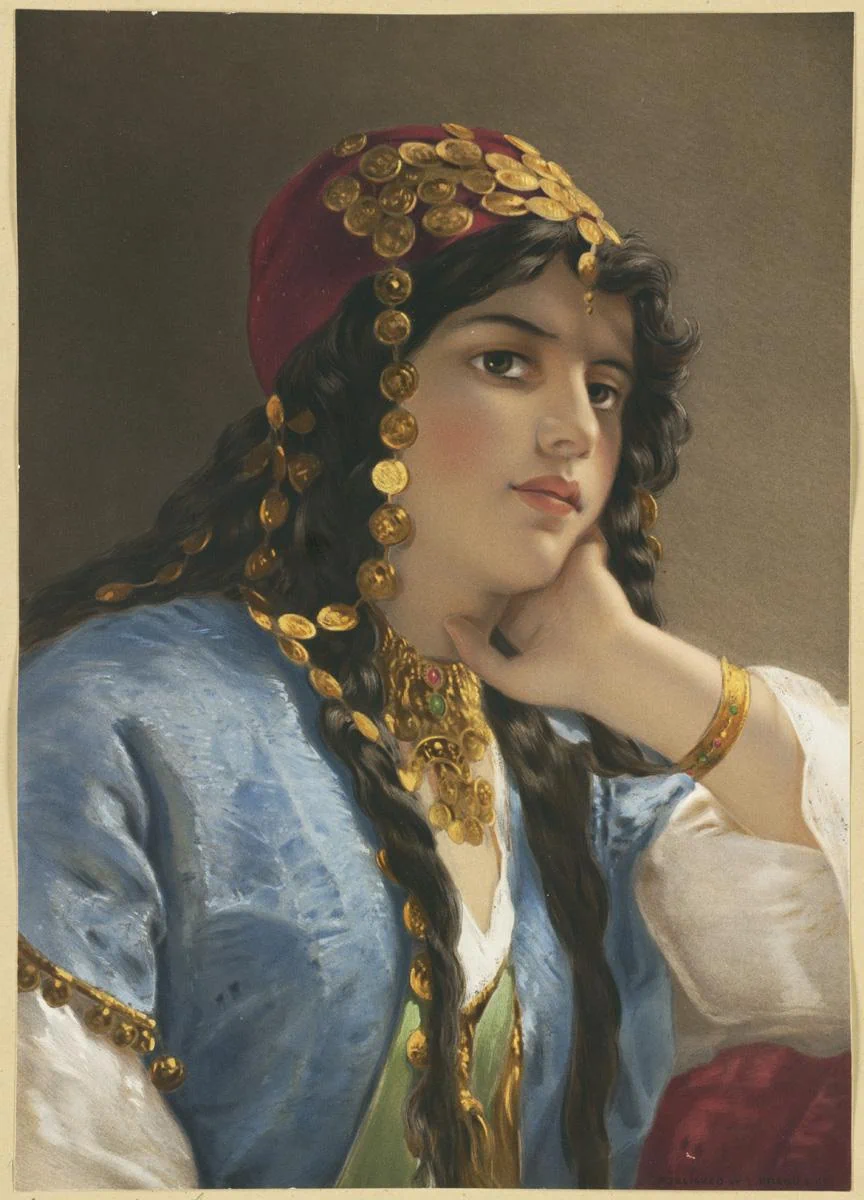
A cariye or imperial concubine
Within the harem, the valide may have stood at the top, but hundreds of other women filled the ranks below her. The Sultan’s wives, concubines, daughters, sisters, and female servants all lived together in this enclosed society, each with roles defined by complex protocol. Many of these women were of slave origin – a defining feature of the Ottoman harem system. In fact, from the 15th century onward, it became exceptional for a sultan to marry a freeborn noblewoman. Most consorts were instead acquired through the vast slave networks that crisscrossed the empire.
The women who came to reside in the Imperial Harem arrived through various means, often from distant lands. Some were seized during Ottoman military campaigns, while others were sent as gifts or tribute from foreign rulers, provincial governors, or ambitious nobles hoping to gain favour. Many were purchased through active slave markets, or recruited from within the empire—typically from families facing economic hardship.
From the 18th century onward, the Black Sea region became a prominent source. Circassian, Georgian, and Russian girls were especially valued for their perceived beauty and grace, and many were brought to Istanbul through long-standing slave routes. Although the Black Sea slave trade was officially banned in 1854, it continued covertly, with some impoverished Circassian families forced to sell their daughters. However they arrived, these women entered a strictly regulated palace world, where their former identities were erased, and they were reshaped into refined courtiers within the empire’s most private sphere.
Regardless of origin, any newcomer to the harem underwent a dramatic transition. Upon entering the palace, the women were converted to Islam if they weren’t Muslim already, and given new Persian or Turkish names that often reflected their traits or beauty. They were taught to speak Turkish, instructed in the Islamic faith, and trained intensively in court etiquette, music, dance, sewing, and the art of conversation. Essentially, a girl might arrive as a stranger or a slave, but after this rigorous education, she could emerge as a polished lady of the palace. This process was designed not only to instil loyalty and grace, but also to sever ties with their former lives – contact with their families or homelands was strictly prohibited once they entered the harem’s walls.
In Western imagination, the word “odalisque” often conjures the image of a harem seductress lounging on pillows. In reality, odalık (derived from oda, meaning “chamber”) originally meant a chambermaid or attendant, a junior slave girl who might never even see the sultan. Only a select few would rise from these humble ranks to become the sultan’s companions. The vast majority of harem women lived more ordinary, even monotonous lives – cleaning rooms, serving senior women, perfecting their skills, and hoping for a chance to advance.
Promotion within the harem came down to talent, intellect, charisma – and a dose of luck. The internal hierarchy was meticulous, like ranks in a military unit or grades in a school. Every woman began as an acemi, a novice, and if she proved herself, she could ascend step by step. Historians describe a typical progression through ranks, such as:
Acemi – the novice, newly entered and undergoing training.
Şakird – the apprentice, having learned the basics, now assists senior women (this term appears less in records, but corresponds to the next stage after novice).
Gedikli – a personal attendant to the sultan, literally “one who sits at the threshold,” waiting on the sultan in person. Only a small number of highly trusted women achieved this role.
Usta – a master or teacher, often an older woman who had proven skills (for example, as a treasurer, seamstress, or tutor to younger girls).
Kadınefendi (Kadın) – a title meaning “wife” (literally “woman”), used for the sultan’s official consorts. There were usually up to four women who held the rank of Kadın at any time, reflecting a practice influenced by Islamic law (which allowed four legal wives). They enjoyed great prestige, with apartments near the valide sultan and sultan.
Haseki Sultan – the “favourite consort” or chief wife of the sultan, a coveted title in the 16th–17th centuries. The haseki (such as the famous Hürrem Sultan, consort of Süleyman) outranked all other women except the valide sultan herself. Unusually, a haseki could wield financial resources and political influence, sometimes even acting on the valide’s behalf.
To become a haseki or even a kadın was rare – these were the shining stars of the harem. But any concubine who bore the sultan a son immediately gained status, becoming part of the dynastic family (often honoured with the title “mother of a prince”). Those who shared the sultan’s bed but did not become formal wives might earn titles like gözde (the favourite) or ikbal (the fortunate). Such titles indicated they had caught the sultan’s eye – a potentially fleeting but enviable distinction. Importantly, only a handful of women in the harem were ever intimate with the sultan. Contrary to lurid fantasies of hundreds of concubines at the Sultan’s beck and call, most harem women never even saw the ruler except maybe at a distance. The majority were destined for other futures: many would be married off to Ottoman pashas (officials), as mentioned, or continue serving loyally in the palace.
At the apex of this female hierarchy sat the Valide Sultan, and immediately below her the sultan’s daughters and sisters – Ottoman princesses who carried the blood of the dynasty. These princesses were often powerful figures in their own right, sometimes acting as patrons of art and charity, and their marriages were important tools of diplomacy. Below them were the senior consorts (kadıns and the haseki), then the ikbals and gözdes, and so on down to the novices. Every woman knew her place, and advancement could breed intense rivalries.
Inevitably, politics flourished within the harem’s walls. The most influential women – the valide, the favoured consorts, and even palace-born princesses – formed alliances and factions, each promoting the interests of their own children or protégés. A favourite concubine might secure promising posts for her allies in the palace, or subtly sabotage a rival’s chances to see the sultan. The valide sultan, as the matriarch, often brokered peace but could also play factions against each other to maintain control. These intrigues reached a fever pitch during the Sultanate of Women, when a series of forceful valide sultans and royal consorts effectively governed the empire from behind the lattice screens. Hürrem Sultan (Roxelana), originally a Ukrainian concubine, became Sultan Süleyman’s legal wife and used her unprecedented status to seat her son Selim II on the throne – breaking centuries of protocol. Decades later, Kösem Sultan, through shrewd machinations, served as regent for her son and then her young grandson, becoming de facto ruler of the empire until her rivals finally plotted her downfall. Such women proved that the harem was not just a place of leisure; it was a crucible of power, where ambition, family loyalty, and survival instincts produced both cooperation and conflict.
Still, it must be remembered that most harem women were not power players, but silent supporters of the dynasty’s machinery. Countless concubines who never rose to prominence lived out their days in relative obscurity – the so-called “forgotten women” of the harems. They performed their duties, honed their crafts, and upheld the honour of the household, but history has left their names and stories largely unrecorded. Occasionally, some contact with the outside world was allowed through intermediaries (like the Jewish women merchants, kira, who delivered luxury goods and messages to harem ladies), but such instances were rare. For the most part, the harem remained intentionally cloistered, its inhabitants veiled from public view. This enforced seclusion preserved the mystique and sanctity of the sultan’s family life – a privacy so absolute that it became a source of fascination and rumour across the globe.
The Eunuchs: Guardians of the Inner Court
The harem was guarded and managed by eunuchs—men castrated in their youth, often of Nilotic origin. Following the conquest of Egypt in 1517, the Ottomans gained access to African slave routes, and Black Eunuchs increasingly replaced their White counterparts in managing the harem.
By the 17th century, the Chief Black Eunuch (Kızlar Ağası) oversaw 800 to 1,200 eunuchs. He held enormous influence, second only to the grand vizier. Entrusted with controlling access to the harem and communicating with the sultan, he also supervised property and wealth within the harem. Black eunuchs, though oppressed by white palace factions, became indispensable allies to the valide sultan and key players in imperial succession.
The Chief White Eunuch (Kapı Ağası), meanwhile, oversaw the inner palace bureaucracy, including education and ceremonial functions. However, after a series of abuses, their influence waned. Eunuchs served as confidants, messengers, and protectors—both invisible and indispensable. Some grew wealthy and powerful, funding mosques and charities across the empire.
Conclusion
The Ottoman Imperial Harem was more than an exoticised enclave. It was a deeply rooted institution central to the Ottoman dynasty, its politics, and its vision of imperial rule. From the powerful valide sultans to the silent servants who maintained its rhythm, the harem was a world of structure, ambition, and influence. It embodied the hidden side of empire: the domestic and political forces that shaped one of the world’s greatest Islamic powers from behind palace walls.


Luciano Anastasi
Luciano is the founder of the MedievalHistory platform and the LinkedIn History Enthusiasts Group, where he is dedicated to curating and sharing high-quality medieval history content. His goal is to engage scholars, teachers, students, and enthusiasts by fostering insightful discussions and promoting scholarly resources on topics from medieval warfare and religion to societal transformations and daily life in the Middle Ages.
Luciano is also an active book reviewer, focusing on academic publications related to medieval history. He recently collaborated with Yale University Press to review forthcoming medieval history titles, aiming to deepen educators' and researchers' understanding of the period. Alongside his history endeavors, he has over 40 years of experience in IT leadership roles across various industries, including the public sector, banking, insurance, airlines and consulting, and has contributed to United Nations projects.
With a Master of Arts in Business Process Management, Luciano combines his expertise in IT strategy and governance with his passion for medieval history. He leverages technology to bridge the academic community and the wider public, making historical scholarship more accessible through engaging online content.