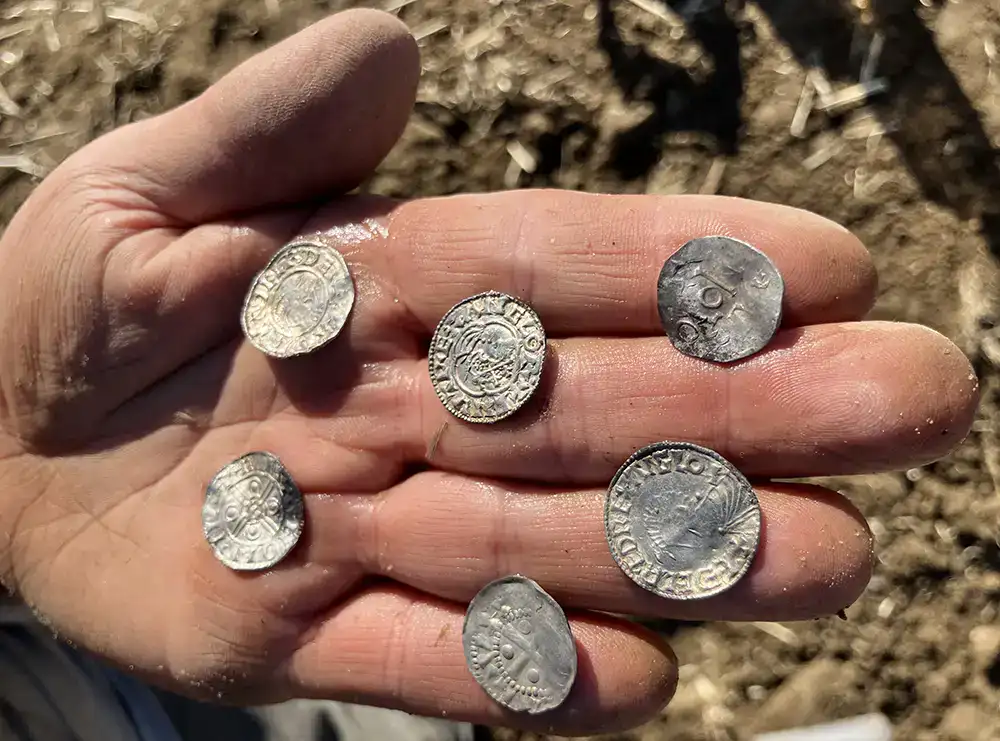
Viking Silver Found in Norway's largest-ever hoard: 4,700+ coins unearthed near Rena, Østerdalen in 2026, dating to the late 1040s — a once-in-a-lifetime find.
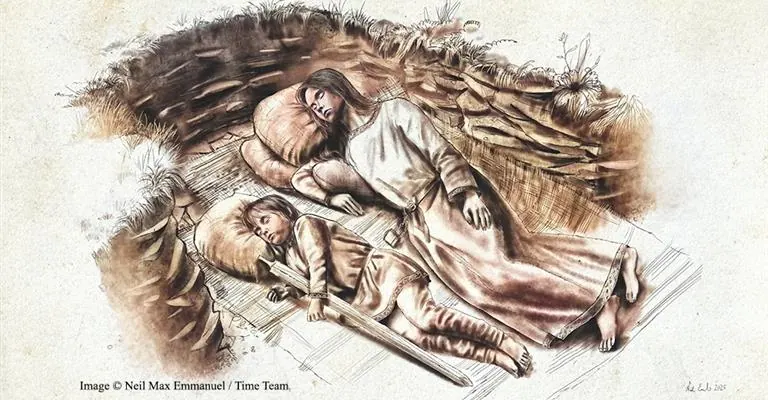
An Elder Sister's Care: DNA confirms Anglo-Saxon siblings buried together at Cherington—a 1,400-year-old double grave rewriting how we understand early medieval family bonds.
- 27 April 2026
- 19 Min Read

The Bible manuscript Codex H, stripped apart at Mount Athos and hidden in medieval bindings, is being digitally reconstructed — its ghost text recovered after 1,400 years.
- 20 April 2026
- 11 Min Read

Plague: Fifteen skeletons beneath a Basel concert hall confirm Y. pestis in Switzerland's last epidemic. Their worn bones and poor diets reveal inequality shaped who died.

Medieval City. Stolzenberg (~1300) uncovered in NW Poland. Streets, a moat and a market square have been mapped. Why it was abandoned remains unknown.
- 23 March 2026
- 11 Min Read

Mysterious Medieval Tunnel: At Reinstedt, a team found an erdstall cut into a 6,000-year-old grave enclosure, reigniting refuge-versus-ritual debates once more.

Viking-Age woman's boat grave on Norway’s Senja Island (c. 900–950 CE) held her skeleton and loyal dog, alongside textile tools and brooches signalling high status.
- 23 February 2026
- 13 Min Read

Otto the Great: A conservation crisis in Magdeburg Cathedral led to the 2025 opening of his inner coffin—revealing bones, textiles, and eggshells.
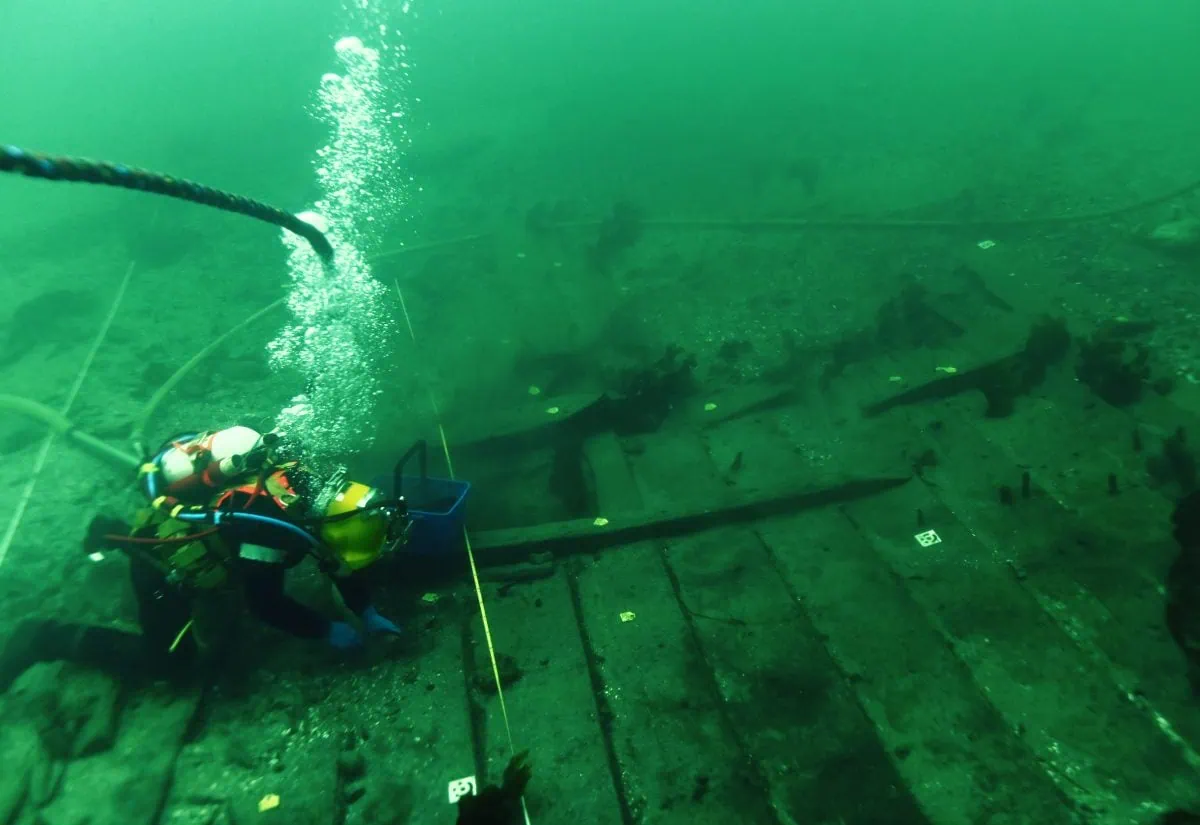
Medieval Cog Svælget 2 – a 1410-built, 300-tonne cargo ship – has been uncovered off Copenhagen. Its size and build illuminate the scale of late-Hanseatic trade networks.

Skipsea Castle: Archaeology reveals a lost Anglo-Saxon lordly centre beneath the Norman mound, reshaping how we understand power on the eve of 1066.